- Financing/Leasing Available | Se Habla Español
- +17137485441
- +17137485453


What Are the Best Commercial Ovens in China?
Choosing the best commercial ovens in China begins with the kitchen, not the catalogue. A busy bakery needs even heat across full trays. A hotel kitchen may value fast recovery between service periods. A small café often needs a compact footprint and simple controls. The right oven must fit its workload, staff, and available utilities.
Details matter. Compare usable chamber dimensions, temperature stability, cooking modes, cleaning access, and local service support. Ask suppliers for operating demonstrations and clear information about installation requirements. A polished control panel is not proof of reliable performance. Neither is a low purchase price. Ask what happens when a door seal wears or a heating element fails.
The market includes convection, deck, combi, and specialized baking ovens. Each serves different tasks. A combi model can handle varied menus, but its extra functions may add training and maintenance demands. Simple can be better. Buyers should also consider energy use under realistic operating conditions, rather than relying on broad claims.
One important note: no source was provided for a named commercial-oven expert’s published statement. Inventing a quotation or attaching one to a real person would weaken trust. A verified expert quote should be added only after checking its original source. This guide instead focuses on practical selection criteria and the trade-offs buyers can inspect themselves. The best choice is not automatically the most advanced model. It is the oven that performs consistently, suits the menu, and has dependable support when something goes wrong.
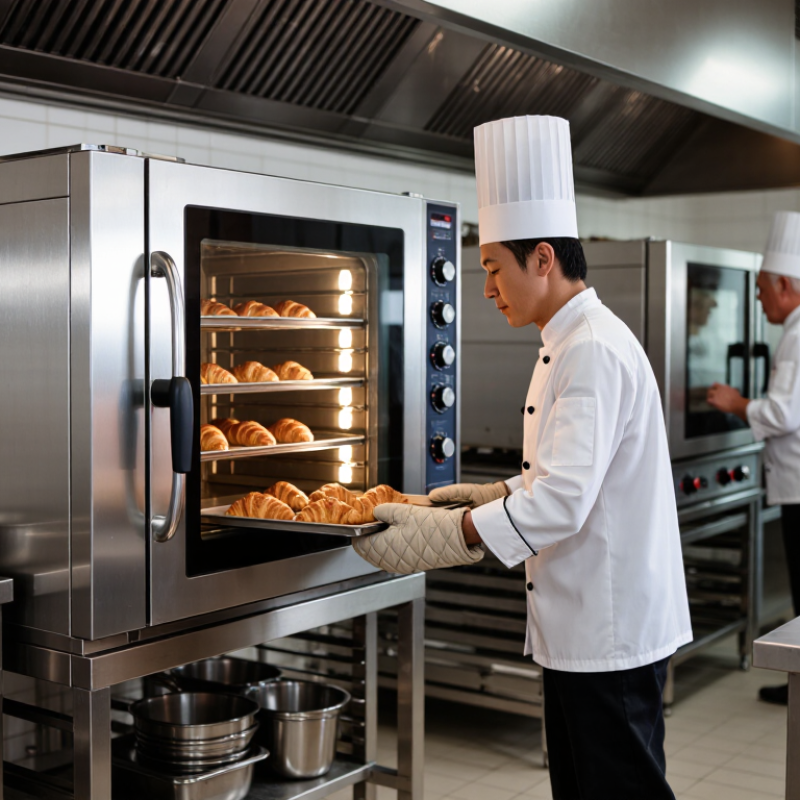
Commercial Oven Types in China: Convection, Deck, Combi, and Conveyor
China’s catering revenue reached RMB 5.29 trillion in 2023. The National Bureau of Statistics reported 20.4% annual growth, a demand signal rather than an oven-sales figure. Convection ovens suit cafés and bakeries needing even heat across trays. Deck ovens provide strong radiant heat for crisp pizza bases and loaves, but each deck needs careful temperature management. Combi ovens combine steam and dry heat, useful for kitchens switching between vegetables, roasts, and baked dishes. Conveyor ovens keep output moving at a steady pace. They need enough service volume to justify their floor space.
The U.S. Environmental Protection Agency reports that qualifying commercial ovens can use about 20% less energy than conventional models. Treat this as a reference point, not a China-specific guarantee; local voltage, fuel supply, installation, and operating patterns affect results. In a humid coastal kitchen, for example, door opening and steam recovery may matter as much as rated capacity. Ask suppliers for energy figures under comparable test conditions, then check tray dimensions and recovery time during a live cooking trial. I would not choose by headline capacity alone. Small kitchens often discover that cleaning access was underestimated.
What Are the Best Commercial Ovens in China? Commercial Oven Types: Convection, Deck, Combi, and Conveyor
| Oven Type | How It Cooks | Typical Capacity or Throughput | Best-Suited Applications | Key Advantages | Main Considerations | Useful Buying Checks |
|---|---|---|---|---|---|---|
| Convection Oven | Fans circulate heated air around food for relatively even cooking and browning. | Common commercial configurations hold several full-size sheet pans; capacity varies by cabinet size and pan spacing. | Bakeries, cafés, hotels, restaurant kitchens, and operations preparing pastries, roasted foods, or multiple menu items. | Versatile; cooks multiple trays at once; often simpler to operate than a combi oven. | Air movement may not suit every delicate product. Tray loading, airflow, and batch size affect results. | Check usable tray dimensions, number of rack positions, fan settings, temperature range, door clearance, and cleaning access. |
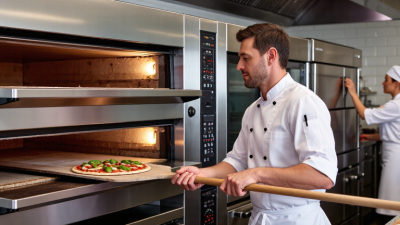
| Deck Oven | Food cooks on a heated stone or metal deck, with heat transferred from the deck and oven chamber. | Available with one or more decks; each deck may be divided into separate baking chambers depending on the design. | Bread and pizza production, artisan bakeries, and kitchens seeking a crisp base or strong bottom heat. | Good control over bottom heat; suitable for hearth-style baking; separate decks can support different products or temperatures. | Usually needs more floor space and operator attention than a compact oven. Heat-up time and recovery depend on construction and use. | Compare deck material and dimensions, chamber height, independent temperature controls, steam options, and required clearance. |
| Combi Oven | Combines convection heat with steam, allowing dry-heat, steam, and combination cooking modes. | Often specified by the number and size of GN pans or trays the cabinet can hold; available in a range of capacities. | Hotels, institutional kitchens, central kitchens, and restaurants with varied menus and batch-cooking needs. | Supports a wide range of cooking methods; can help maintain moisture and consistency; programmable cooking can standardize processes. | Higher purchase and maintenance complexity than many basic ovens. Water quality, drainage, and descaling requirements matter. | Check GN compatibility, water and drain connections, cleaning programs, service access, controls, and local installation requirements. |
| Conveyor Oven | Food travels through a heated chamber on a moving belt; cooking time is controlled by belt speed and temperature. | Continuous output is measured in items per hour; actual throughput depends on belt width, product size, and cooking time. | High-volume pizza, sandwiches, snacks, and other standardized products in quick-service or production settings. | Consistent repeatable cooking; continuous operation can reduce the need for repeated manual loading and unloading. | Less flexible for products with different cooking requirements. Requires a suitable production layout and regular belt cleaning. | Compare belt width and length, temperature range, speed adjustment, exhaust needs, cleaning access, and expected peak-hour output. |
Selection note: Capacity and performance depend on the specific model, product, loading pattern, and operating conditions. Before purchasing in China, confirm the equipment’s electrical supply, power requirements, ventilation, water and drainage needs, available service support, and compliance with applicable local requirements.
Related Posts
-
Why Choose Commercial Restaurant Ovens for Your Business?
-
How to Choose the Right Bakery Deck Ovens in 2026?
-
Why Choosing the Right Pizza Equipment Can Make or Break Your Business?
-

10 Best Pizza Equipment for Commercial Kitchens?
-

Why Convection Ovens Are the Ultimate Choice for Effortless Cooking and Delicious Meals
-
7 Tips for Choosing the Best Pizza Deck Oven