How to Choose the Best Bakery Oven for Your Business?
Choosing the best bakery oven for your business is not simply a matter of selecting the largest model. It is a production decision. Your oven affects crust color, crumb texture, energy costs, staff routines, and daily output. A small café may need a compact convection oven for pastries and sandwiches. A high-volume bread shop may require a deck oven with strong steam control. The right choice begins with your products, batch sizes, available space, and expected growth.
Jeffrey Hamelman, a respected baking educator and author, has often emphasized, “The oven is the heart of the bakery.” That idea remains practical. An oven with uneven heat can leave one tray pale while another burns. A weak door seal can waste energy during every bake. A complicated control panel may also slow new employees during busy morning production. These details are easy to overlook.
Look closely at temperature recovery, chamber size, airflow, steam injection, cleaning access, and service support. Ask suppliers for operating data, not only attractive brochures. Speak with bakery owners who produce similar products. Their experience may reveal problems hidden during a showroom demonstration. It is also wise to calculate installation costs, ventilation needs, electrical capacity, and long-term maintenance before signing a purchase agreement.
No oven is perfect. I have seen buyers focus on capacity and regret ignoring workflow. Your first estimate may be wrong. Recheck it. A reliable bakery oven should match today’s recipes while leaving sensible room for tomorrow’s demand. This guide will help you compare oven types, evaluate essential features, and avoid expensive decisions based on appearance alone.
Understanding Bakery Oven Types and Their Applications
Choosing a bakery oven starts with understanding how different oven types behave.
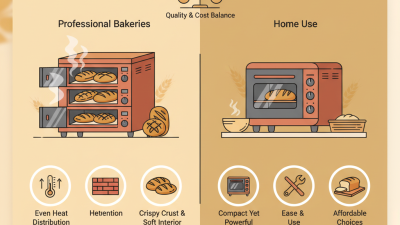
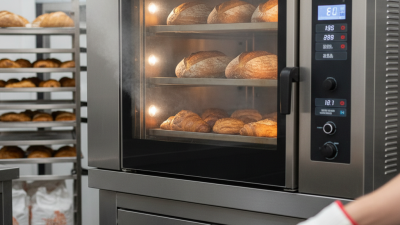
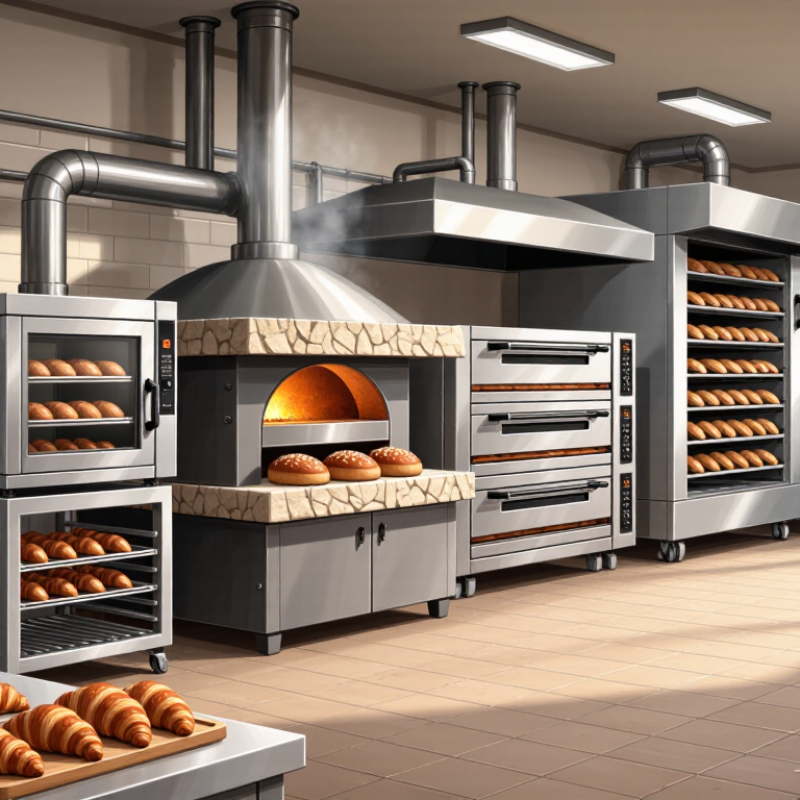
A convection oven uses circulating hot air for even baking and fast recovery. It suits cookies, muffins, pastries, and small bread batches.
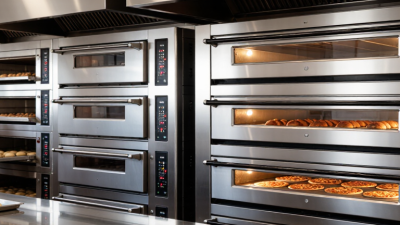
A deck oven provides steady heat from stone or metal surfaces. It works well for artisan bread, pizza, and products needing a firm crust.
The baking surface matters.
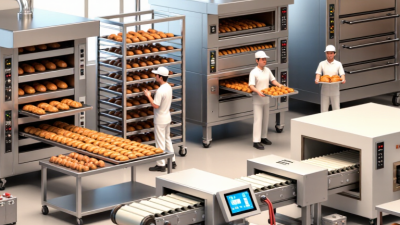
A rotary rack oven moves trays through a controlled heat chamber. It supports higher production and consistent results across multiple racks. This type can fit bread rolls, cakes, and frozen dough products.
Tunnel ovens are designed for continuous production. They require substantial floor space, careful loading, and stable demand.
Combi ovens add steam control, which helps improve crust development and reduce surface drying.
Match the oven to your daily workflow, not only your maximum output.
Measure doorways, ventilation points, electrical capacity, and cleaning access before purchase. A crowded workspace slows production and increases handling risks.
I have seen businesses choose oversized ovens, then struggle with uneven loading and wasted energy.
That mistake is easy to make. Temperature recovery, programmable controls, insulation, and service access also deserve close attention.
Ask for test baking with your own dough, pans, and recipes. A specification sheet cannot reveal every practical problem. Record baking time, color, moisture, and energy use during the trial. Those details support a more reliable decision.
Evaluating Capacity, Energy Use, and Baking Performance
Choosing a bakery oven starts with production reality, not showroom size. Measure trays per batch, peak orders, and available floor space. A 10-tray oven may appear efficient, but unused capacity still consumes heat and electricity. The U.S. Energy Information Administration reports that commercial kitchens are significant energy users, making load planning important. Record your busiest two-hour period. Then select capacity with modest headroom, rather than buying for rare seasonal demand.
Energy use deserves closer inspection. ENERGY STAR commercial oven criteria require meaningful efficiency improvements over standard models, including minimum gains for convection and rack ovens. Compare energy input per bake, not only the nameplate rating. A well-insulated chamber, quick door recovery, and programmable idle settings can reduce waste. However, lower energy use may mean slower recovery in some designs. Test before deciding. Ask for measured data under a full load, because empty-oven figures can mislead.
Tips: Run a practical trial with your own dough, trays, and baking schedule. Check crust color across every rack, steam recovery after opening the door, and temperature variation near the corners. The American Society of Baking stresses process control and repeatability as core bakery quality factors. Keep a simple log of bake time, energy readings, rejects, and cleaning effort. My own caution is simple: performance claims are rarely the whole story. A cheaper oven can become expensive when uneven heat creates daily rework.
Matching Oven Features to Your Products and Workflow
Choosing the best bakery oven starts with your products, not its appearance.
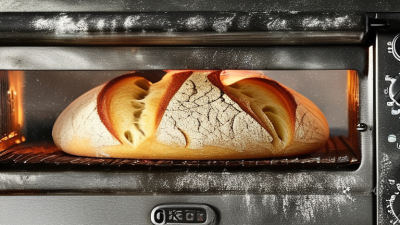
A crusty sourdough loaf needs strong steam and stable heat recovery. Delicate pastries require precise temperature control and gentle airflow. Pizza, cookies, and enriched bread may need different baking profiles. Review your recipes, batch sizes, and daily production schedule before comparing oven features.
Your workflow matters just as much.
A fast-heating oven can reduce waiting time during busy mornings. Multiple rack positions help when products bake at different temperatures. A clear door, interior light, and simple controls support safer, faster decisions. If staff handle several tasks, programmable settings can improve consistency. However, automation is not a substitute for training. Small temperature differences can still change color, moisture, and texture.
Tips:
Track three details for each product:
temperature, baking time, and batch size.
Test an oven with your own dough whenever possible. Watch heat recovery after opening the door. Also measure cleaning time, because a difficult oven may slow the entire shift.
I once underestimated loading space and regretted it during holiday production.
More capacity is not always better. A large chamber may waste energy when your batches remain small. Choose the features your team will use repeatedly, and question the ones that only look impressive.
Selecting the Right Oven for Your Business Growth
How to Choose the Best Bakery Oven for Your Business?
Selecting the Right Oven for Your Business Growth
A bakery oven should support growth, not simply produce heat. Start by matching its capacity to your busiest production hours. A small oven may seem economical, but repeated batches can slow service and increase labor costs. A larger model offers room for expansion, although unused capacity can waste energy. Measure your workspace carefully, including door clearance and ventilation access. In test bakes, consistent temperature recovery often matters more than impressive maximum heat.
Tips: Test the oven with your actual recipes. Bring bread, pastries, and enriched dough. Check crust color, moisture, baking time, and tray placement. Ask how easily staff can clean the chamber and reach service parts. Simple maintenance prevents many expensive interruptions.
Consider controls that your team can use confidently during busy periods. Adjustable steam, stable airflow, and even heat can improve product consistency. Energy consumption also deserves attention, especially when the oven runs for many hours daily. Ask for documented performance data and warranty conditions. A cheaper purchase may become costly if repairs are slow or parts are difficult to obtain. I have seen businesses choose excess capacity too early, then struggle with installation costs and unused space. Growth is important, but realistic production forecasts are better. Leave some flexibility for future demand.