2026 Top Bread Deck Ovens for Commercial Bakeries
Commercial bakeries choose ovens under pressure from production targets, energy bills, and limited floor space. A bread deck oven can deliver strong bottom heat and distinct crusts, but its real value depends on the products, bake schedule, and staff using it. A beautiful loaf is only part of the test. Recovery time between loads, temperature consistency, steam control, and cleaning access matter during a crowded morning shift.
Industry data helps put those choices in context. ENERGY STAR’s commercial-oven guidance reports that certified models are about 20% more energy efficient than standard models, though actual savings vary with use and installation (ENERGY STAR, Commercial Ovens). The American Bakers Association’s 2024 Baking Industry Economic Report offers broader context on the conditions facing commercial baking businesses. These sources do not rank individual deck ovens, so this guide compares equipment features rather than promising a universal winner. That distinction matters.
The 2026 selections focus on commercial capacity, heat performance, controls, serviceability, and practical operating costs. We consider small artisan shops and higher-volume bakeries, where a few minutes of recovery time can affect the whole production plan. Specifications alone can mislead. A larger chamber may add flexibility, yet consume valuable space and require more power. Use this overview to identify suitable models, then verify local service support, installation requirements, and operating costs with manufacturers or qualified technicians before buying.
What a Commercial Bread Deck Oven Is and How It Works
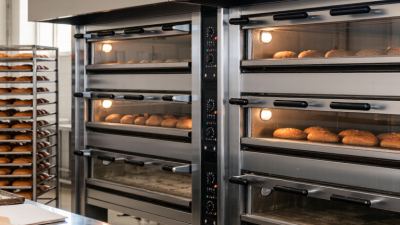
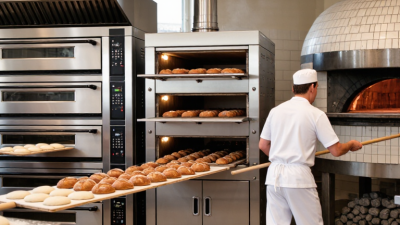
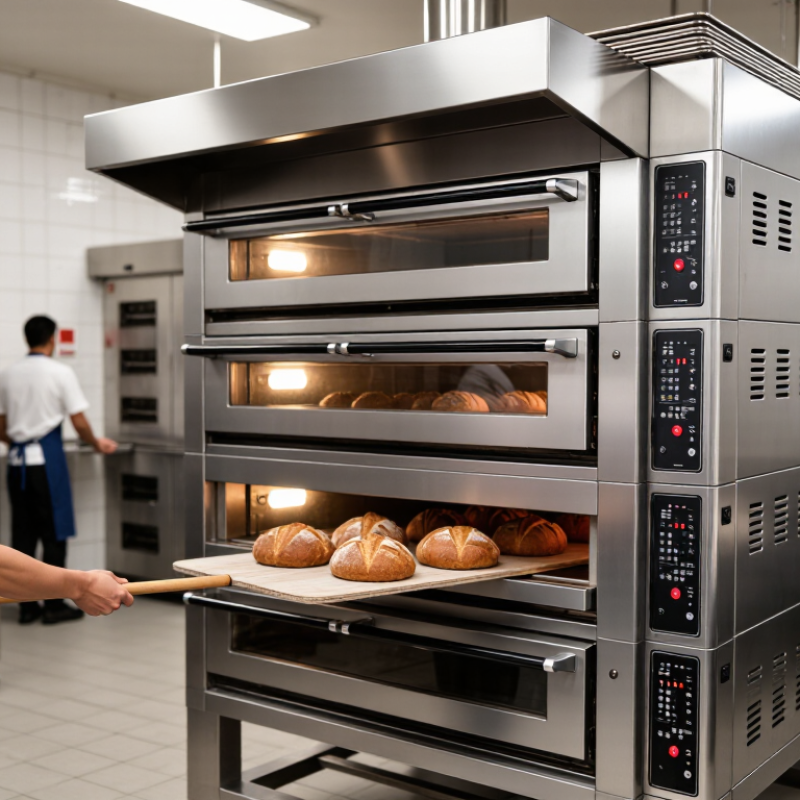
A commercial bread deck oven bakes loaves on separate heated shelves called decks. Each deck usually has a baking surface, independent heat controls, and steam injection. Electric elements or gas burners heat the chamber; stored heat transfers into the dough from below, while radiant heat browns the crust. Steam released early in the bake keeps the surface flexible, helping the loaf expand before its crust sets. The result is a crisp base and a well-developed crust. Heat matters.
Deck ovens suit bakeries producing hearth-style breads, baguettes, and sourdough in batches. Operators load shaped dough with a peel, add steam, then adjust temperature and bake time for loaf size and hydration. The American Bakers Association’s 2024 economic-impact report estimates that the U.S. baking industry generates $186 billion in direct economic output. That scale makes repeatable oven performance valuable, but the report measures industry impact, not oven efficiency. Real dough varies. A crowded deck, uneven loading, or changing dough temperature can still produce inconsistent loaves.
Tips: Preheat each deck fully, and test the oven with the bakery’s own dough. Check color and internal temperature across several positions; one perfect loaf proves little. Keep a simple bake log. The neat theory needs practical correction.
How Deck Design Affects Heat, Steam, and Bread Quality
Deck design shapes how evenly a loaf bakes, how quickly the oven recovers, and how steam reaches the crust. A thick stone or steel deck stores heat, helping the loaf’s base set when cold dough is loaded. But a heavy deck may recover slowly after a busy loading cycle. Watch the oven between batches, not just at the start of a shift.
Chamber height and steam-inlet placement also matter. Steam should spread across the loaf surfaces before the crust firms. A narrow chamber can concentrate heat near the top, while poorly distributed steam may leave some loaves glossy and others dull. Steam matters. Check several positions on the deck with similar dough pieces; one perfect loaf does not prove the chamber is even.
For a bakery, independent top-and-bottom heat controls can help match different breads to the same oven. A lean hearth loaf may need strong bottom heat, while enriched dough can brown too quickly underneath. Use a probe or consistent bake records to compare settings, loaf color, and bake time. Setpoint readings can be reassuring, but they are not the whole story. Deck material, door openings, load size, and dough temperature all change results. And a neat chart will not catch every uneven batch. That is worth admitting.
Key Criteria for Evaluating Commercial Deck Ovens in 2026
A useful deck-oven comparison begins with the bakery’s actual production rhythm. Record peak-hour trays, loaf dimensions, and bake times before comparing oven capacity. A deck that fits four trays may still bottleneck when loading takes too long. Watch how quickly the oven recovers after a full load; slow recovery can leave later batches pale underneath. Test it with your own dough.
Heat distribution matters as much as maximum temperature. Bake identical loaves at different deck positions, then compare crust color and bottom browning. Ask whether each deck has separate temperature controls and whether steam can be adjusted by chamber. Steam should support a crisp, glossy crust without leaving surfaces damp. Small details matter.
Check insulation, door seals, and controls during a demonstration, not only in a specification sheet. Estimate energy use against your real weekly schedule, including warm-up and idle periods. Confirm that routine cleaning is practical and that replacement parts and qualified service are accessible locally. A compact footprint may help, but leave room for safe loading and maintenance. One limitation remains: a short test cannot predict every seasonal change in dough or humidity. Keep trial notes and compare results over several production days.
2026 Top Bread Deck Ovens for Commercial Bakeries
Key Criteria for Evaluating Commercial Deck Ovens in 2026
Suggested evaluation weighting for a bakery equipment shortlist. These percentages are a planning framework, not measured market data; adjust them to match your production volume, product range, energy costs, and available space.
Comparing Leading Bread Deck Oven Types and Configurations
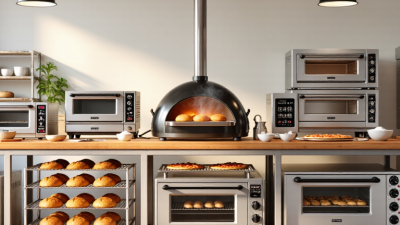
Commercial bread deck ovens differ in heat source, deck material, and chamber layout. Stone or refractory decks store heat and transfer it directly to dough, helping produce a well-browned base. That matters. Electric models often allow separate top and bottom heat settings, while gas-fired units may suit operations with existing gas service and suitable ventilation. Performance still depends on installation and calibration.
Deck count changes the work rhythm. A single-deck oven can fit a compact bakery, but larger operations may prefer stacked decks to bake several products at different temperatures. Modular sections offer another option: adding capacity later can be easier than replacing one oversized unit. Steam injection is useful for many crusty breads, yet its value depends on the menu and water treatment. More features are not always better.
Check usable deck dimensions, not just the listed capacity. A tray that nearly touches the chamber wall can restrict airflow and make loading awkward. Ask for the temperature recovery time after a full load, then test with dough similar to your own. Small differences in loaf size, hydration, and loading habits can change results. They add up. Energy use, cleaning access, and service availability also deserve attention; these details are easy to overlook during a showroom demonstration. A chosen configuration should match daily production, not an idealized peak shift.
How to Match an Oven to Bakery Capacity and Workflow
Matching a deck oven to bakery capacity starts with peak-hour demand, not daily averages. Count loaves per batch, bake time, loading time, and deck recovery; then compare that cycle with the busiest hour. Small details matter. A four-deck oven may look ample, but crowded loading space or slow unloading can bottleneck production. For hearth breads, separate deck controls help teams bake different products without forcing one temperature across every batch. For a mixed menu, check how quickly operators can switch settings and stage trays nearby.
Workflow deserves equal weight. Map the path from mixer to divider, oven, cooling rack, and packing bench. If hot trays cross the main aisle, nominal capacity may not become usable output. ENERGY STAR reports that certified commercial ovens are about 20% more energy efficient than standard models, so compare efficiency alongside throughput and installation needs. The U.S. Bureau of Labor Statistics’ Occupational Outlook Handbook projects 5% employment growth for bakers from 2023 to 2033. That is not a staffing forecast for every bakery, but it reinforces the value of reducing repetitive handling. A spreadsheet can still mislead. Test the proposed oven against a real production shift, including changeovers, cleaning, and the occasional imperfect batch.