Why Are Buyers Choosing Dried Cucumber Powder?
Dried Cucumber Powder is drawing attention from product developers who want cucumber’s fresh, mild character in a compact, easy-to-handle form. It can blend into seasoning mixes, soups, dips, and dry beverage formulations without the moisture of fresh cucumber. A spoonful offers a practical advantage. It also raises real questions: How was the powder dried? How fine is the grind? Does its aroma remain noticeable after mixing?
Buyers are not choosing on convenience alone. They may compare color, flavor, moisture level, solubility, packaging, and batch consistency. These details matter in a test kitchen. A pale green powder might look appealing in a pouch but turn muted in a sauce. That is worth checking. The final result depends on processing and recipe conditions, so claims about flavor or performance should be confirmed with samples and product specifications.
A relevant expert quotation can add authority, but no source or verified expert statement was provided here. I won’t invent a person or attribute fabricated words to one. A suitable, original editorial line for later expert review would be: “The useful question is not just how convenient the powder is, but how consistently it performs in the finished recipe.” With a real specialist’s name and approval, that insight could anchor a fuller discussion of sourcing, processing, and buyer priorities. Until then, treat it as a prompt for evaluation—not proof of a product’s quality.
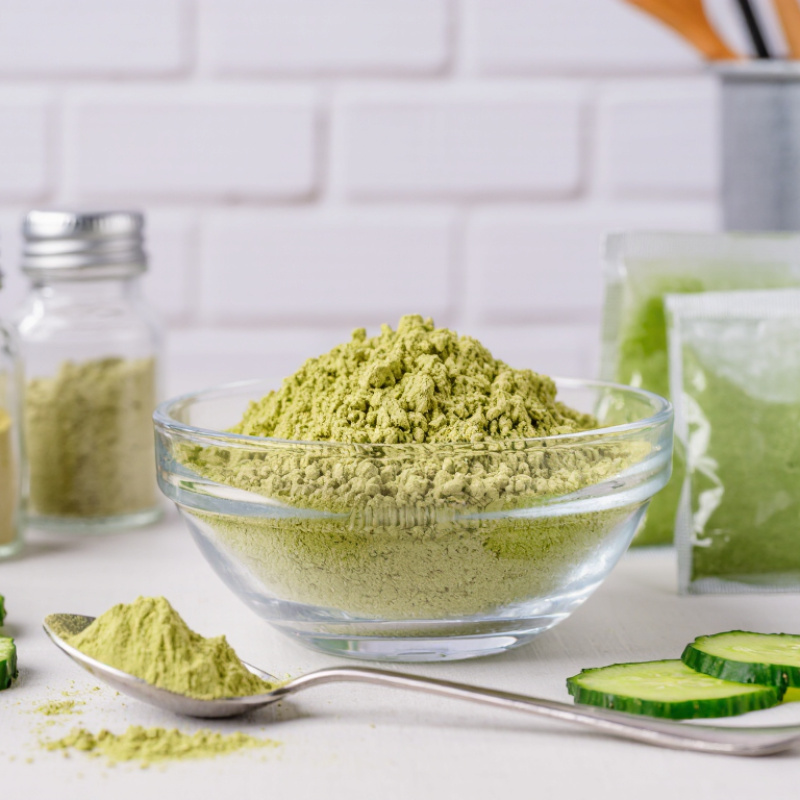
What Dried Cucumber Powder Is and How It Is Made
Dried cucumber powder is made by removing most of the water from cucumbers, then milling the dried pieces into a fine powder. It is not simply fresh cucumber crushed dry: washing, trimming, slicing, drying, and sieving all affect its color and texture. Some processors use controlled hot-air drying; others use freeze-drying, which can produce a different aroma and particle structure. There is no single texture.
The USDA FoodData Central database lists raw cucumber with peel as 95.23 grams of water per 100 grams. On a simple solids-only estimate, one kilogram of raw cucumber contains about 48 grams of non-water material before trimming or processing losses. That matters. Actual powder yield varies with the cucumber, peel removal, drying method, and final moisture level. After drying, milling and sieving help create a more even powder, while moisture-resistant packaging helps limit clumping. Buyers should check the stated ingredients and processing details, since “cucumber powder” does not reveal whether peel was included or how the cucumber was dried. Texture varies. A powder can look pale green yet taste mild, and color alone is not a reliable measure of freshness or quality.
Key Nutrients, Flavor, and Functional Properties
Buyers choose dried cucumber powder for its compact format and easy use. Removing water creates a shelf-stable ingredient that takes little storage space. Its nutrients can include fiber and small amounts of vitamin K and potassium, but values vary with the cucumber and drying method. It is not a substitute for fresh vegetables. A teaspoon adds flavor, not a full serving of produce.
The flavor is mild, green, and lightly vegetal. It can blend into soups, dips, dressings, or savory dough without adding cucumber slices or extra moisture. The fine powder may thicken a mixture slightly, though results depend on grind size and how much liquid is present. Color can shift during drying, too. Not always vivid green.
Tips: Start with a small pinch in yogurt-based dip or broth, then taste before adding more. Whisk it into liquid to reduce clumps. Check the ingredient label for added salt or other ingredients, and store the powder tightly sealed in a cool, dry cupboard. I would not expect every batch to taste identical; drying and milling can change its aroma.
Why Are Buyers Choosing Dried Cucumber Powder?
Nutrient concentration per 100 g: fresh cucumber compared with an illustrative powder estimate
How to read this chart
The powder values are calculated estimates: they assume cucumber is dried to 5% moisture and that nutrients are fully retained during processing. Actual powder composition varies with cucumber variety, processing, and moisture level. Drying concentrates nutrients by removing water; the powder’s cucumber flavor offers a convenient option for seasonings, soups, and dips.
Fresh cucumber reference: USDA FoodData Central, cucumber with peel, raw (per 100 g). Powder values are illustrative calculations, not laboratory measurements.
How It Compares With Fresh and Other Dried Cucumber Forms
Fresh cucumber delivers crunch and moisture that powder cannot recreate. USDA FoodData Central lists raw cucumber with peel at 95.23 grams of water per 100 grams. That is substantial water. FAOSTAT recorded about 93.5 million tonnes of cucumbers and gherkins worldwide in 2022, illustrating the crop’s large fresh-produce supply. Powder offers a different kind of utility: compact, portionable, and ready to blend into dips, dough, soups, or seasoning mixes.
Compared with Dried Cucumber Slices or flakes, powder disperses more evenly and needs no rehydration step. Slices are better when a visible piece or chewier texture matters. Fresh cucumber wins for salads and other dishes where a crisp bite is the point. Drying removes water, concentrating solids by weight, but flavor, color, and solubility vary with the process and the product specification. Convenient, but imperfect.
For purchasing, check whether the powder is pure cucumber, how finely it is milled, and how it is packed. A fine powder may blend smoothly, yet it can clump after exposure to humidity. A small bench test helps: mix a measured amount into a familiar recipe, then assess taste, color, and texture after resting. USDA nutrient data describe fresh cucumber, not every dried powder, so compare supplier specifications rather than assuming equal nutrition per serving.
Uses in Food, Beverage, and Personal Care Products
Dried cucumber powder appeals to buyers who need a compact ingredient with a mild, fresh vegetable note. In soups, dips, seasoning blends, and savory snacks, it can add cucumber character without bringing extra liquid into the recipe. A pinch stirred into yogurt-based dip gives it a pale green tint and a subtle garden-like aroma. Results vary, though. Drying methods and particle size can shift both color and flavor.
Beverage makers may use the powder in drink mixes, smoothies, or savory refreshers. It disperses differently in water than in thicker blends, so small test batches are useful. Some powders settle or feel slightly grainy. That detail matters. Buyers should check specifications for moisture, mesh size, and ingredient composition, then test the product in the intended recipe.
Personal care formulators may explore cucumber powder in rinse-off masks, scrubs, or bath products for its recognizable botanical identity and dry format. It is not a shortcut to proven skin benefits. The finished formula still needs appropriate stability and safety assessment, and the powder’s color or scent may change during processing. The fit is not automatic. A cucumber note can seem fresh in a face mask but oddly grassy in another base, so careful sampling is part of the work.
What Buyers Consider When Choosing a Supplier
For buyers, choosing a dried cucumber powder supplier begins with clear, usable specifications. Ask for a current sheet covering moisture, particle size, color, aroma, and microbiological criteria. Color matters. A bright green sample may appeal visually, but shade can vary with raw cucumbers and processing. Agree on acceptable ranges rather than relying on a photo or a vague promise.
Reliable documentation matters. Request recent test results, including the test date and methods used, and check that the lot number connects the report to the product you receive. Ask how the cucumbers are washed, dried, milled, and protected from moisture after processing. These details can reveal whether the supplier understands the powder’s intended use. Packaging should seal well; a damp warehouse or a loose liner can undo careful drying.
Consistency needs practical checks. Compare a production sample with the specification, then assess how it disperses in your own recipe or process. A sample can look excellent and still perform poorly. Ask about batch variation, lead times, minimum order quantities, and how complaints are investigated. No supplier is perfect, and answers may expose gaps. What matters is whether those gaps are acknowledged, documented, and addressed with evidence rather than reassurance.

