Energy Ceramics sits at the meeting point of heat, electricity, and demanding material performance. Buyers may encounter it in insulating components, furnace parts, electrochemical devices, and other high-temperature applications. The label alone proves little. A dense ceramic part can still fail if its composition, firing process, or tolerances vary between batches. Small details matter: a chipped edge, a porous surface, or a certificate that does not match the delivered lot.
Ceramic materials pioneer W. David Kingery is a relevant voice for this field. Rather than present an unverified sentence as his exact words, this guide uses an editorial paraphrase of his materials-science perspective: “Judge a ceramic by its structure, properties, and performance in use.” That distinction matters. Global buyers need suppliers who can explain test methods, provide consistent technical records, and discuss application limits without overpromising. Ask for sample data. Check whether reported properties match your operating temperature and environment. Then compare lead times, quality controls, and technical support—not just unit price.
There is no perfect supplier. Even a strong datasheet cannot capture every production variation or installation condition. A little skepticism helps. This overview of top Energy Ceramics suppliers gives buyers a practical starting point for comparing capabilities, evidence, and fit, while leaving room for careful qualification before a purchase decision.
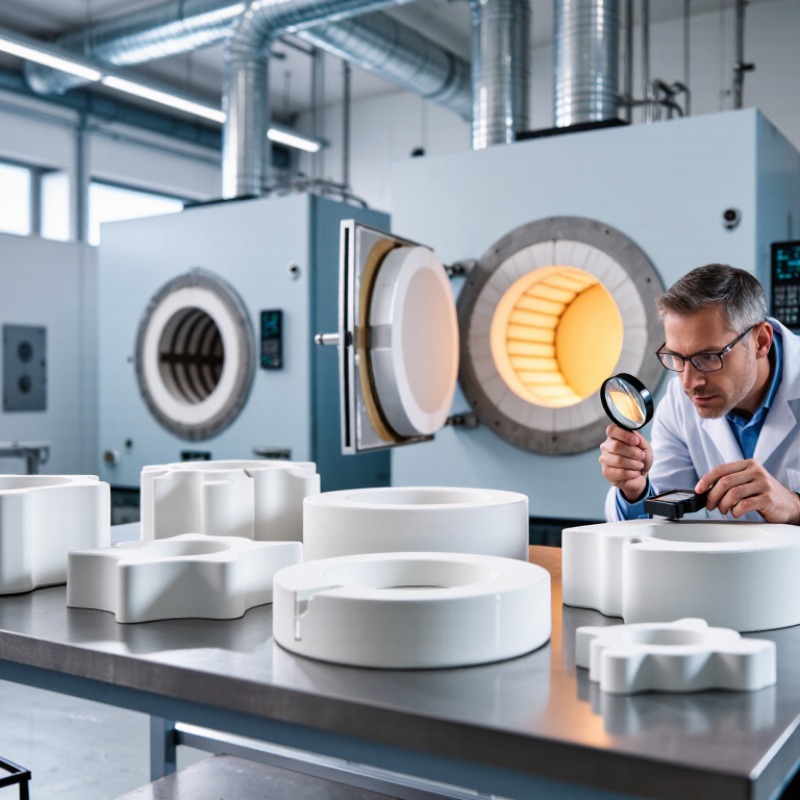
Energy ceramics work where heat, electricity, and mechanical stress meet. In power generation, silicon carbide and alumina components can face hot gases, abrasion, or rapid temperature changes. Zirconia is used in some thermal and electrochemical systems because its properties suit demanding operating conditions. The right choice depends on temperature, atmosphere, load, and design. Heat changes everything.
Energy storage places different demands on ceramic materials. Solid oxide cells use ceramic electrolytes to conduct ions at elevated temperatures. Other storage designs may use ceramic insulators or protective components to manage heat and electrical isolation. A material name alone is not enough. Buyers should ask for relevant test data, dimensions, tolerances, and batch traceability. Small defects matter.
Transmission equipment relies on ceramic insulators to separate energized conductors from supporting structures. Outdoor service adds rain, dust, salt, and repeated heating and cooling. Ask suppliers how they control porosity, surface finish, and firing consistency, and whether their inspection methods match the component’s intended use. A datasheet rarely captures every field condition. Specifications can look precise while real installations remain messy, so representative testing and clear communication are worth the extra time.
Solid oxide fuel cells typically operate between 600°C and 1,000°C, though the exact range depends on cell design and operating conditions. Ceramic parts must tolerate repeated heating, temperature gradients, and contact with gases. A laboratory figure alone is not enough. Ask suppliers for test conditions and service-life data relevant to your assembly.
Alumina grades commonly range from 95% to 99.9% purity. Higher purity can improve some properties, but it does not automatically make a component the best choice. Grain size, porosity, dimensions, and surface finish also matter. A dense part with a sharp edge may still crack during thermal cycling. That comparison is imperfect, and real assemblies can behave differently than sample coupons. Request dimensional tolerances, batch traceability, and inspection records before approving production.
Tips: Share your operating temperature, heating rate, atmosphere, and target service life when requesting quotes. Ask for representative samples, then check fit and thermal performance in your own setup. Compare lead times and packaging for long-distance shipment, too. A small mismatch can delay a whole build.
Global energy-ceramics suppliers serve power generation, grid equipment, and electrification markets. Major manufacturers across Japan, North America, and Europe offer alumina, zirconia, silicon carbide, and electrical insulation products. Their strengths differ: some focus on precision components, while others support larger industrial programs. The IEA’s Renewables 2023 report forecast nearly 3,700 GW of renewable capacity growth from 2023 to 2028. That expansion signals rising demand for durable insulation and heat-resistant components. It is not a ceramic-sales forecast.
Tips: Compare operating temperature, dielectric strength, thermal shock resistance, and dimensional tolerances. Ask for test data under conditions close to your actual duty cycle. A polished datasheet can hide a poor fit.
For global buyers, supplier selection should include process capability, regional production, and quality traceability. Request sample parts and review inspection records before scaling orders. Confirm lead times for custom tooling; they can change project economics. A neat shortlist can still mislead. I would also check how suppliers handle batch variation, since small defects can become costly in high-voltage or high-temperature systems. Do not compare unit price alone.
Global energy projects depend on ceramic parts that remain stable under heat, voltage, and mechanical stress. The IEA’s 2023 report Electricity Grids and Secure Energy Transitions says annual grid investment must rise to more than USD 600 billion by 2030. That scale makes supplier checks practical, not ceremonial.
For ceramic insulating materials, IEC 60672-1 provides classifications, while IEC 60672-2 describes test methods. Ask suppliers to identify the applicable material class and provide traceable test records for the exact product and batch. A certificate alone is thin evidence. Check that the quality system is independently certified to ISO 9001, then review nonconformance records, corrective actions, and how changes to raw materials are controlled. Small details matter: kiln temperature logs, dimensional inspection results, and packaging checks can reveal process discipline.
Capacity claims should be tested against actual kiln schedules, not brochure figures. Request monthly output by product type, current utilization, and backup plans for equipment failure. Confirm lead times in writing, including tooling, sampling, inspection, and shipping. Compare promised dates with recent order history. One awkward question helps: what caused the last delay? Some suppliers may not have clean data; that itself deserves follow-up. Don’t assume a short quoted lead time includes qualification work.
Choosing an energy-ceramics supplier starts with the actual duty cycle. A kiln lining facing rapid temperature changes needs documented thermal-shock testing, not just a high maximum-use temperature. Ask for test conditions, sample dimensions, and failure criteria; results are difficult to compare otherwise. Corrosion resistance also depends on the exact melt, gas, or process chemistry. Request compatibility data for your operating environment, then check whether joints and seals are covered. No test sheet fully recreates a plant. That gap matters.
Cost should include replacement labor, downtime, freight, and expected service life. The IEA’s Energy Efficiency 2023 report attributes about 37% of global final energy consumption to industry, underscoring why avoidable process losses matter. For logistics, the World Bank’s 2023 Logistics Performance Index assesses customs, infrastructure, shipment arrangements, service quality, tracking, and timeliness. Use these factors to assess supplier routes and delivery reliability, not as a guarantee of a specific shipment date. A low unit price may still be expensive.
Tips: Request recent batch certificates, thermal-shock and corrosion test methods, lead times, packaging details, and a clear replacement plan. Compare total installed cost. Be wary of offers that promise long life without stating the conditions; even experienced buyers can overlook that detail.
| Ceramic Material | Thermal Shock Performance | Corrosion Resistance | Relative Cost | Logistics Considerations | Common Energy-Sector Uses | Key Selection Checks |
|---|---|---|---|---|---|---|
| Alumina (Al₂O₃) | Moderate; performance depends on purity, porosity, component geometry, and temperature-change rate. | Generally strong against many oxidizing environments; compatibility should be checked for specific slags, molten metals, and chemical media. | Low to moderate for standard grades and shapes; higher-purity or custom components can cost more. | Standard shapes may be easier to source; dense, brittle parts need protective packaging and careful handling. | Insulators, furnace components, wear parts, and electrical or thermal supports. | Confirm purity, density, dimensions, operating atmosphere, and exposure to thermal cycling. |
| Silicon Carbide (SiC) | Often good because of its high thermal conductivity; actual resistance depends on grade, shape, and thermal gradients. | Good oxidation resistance in many high-temperature air environments; certain molten metals, alkalis, and process chemistries can cause attack. | Moderate to high, depending on grade, forming route, and machining requirements. | Large or complex shapes may require made-to-order production; specify packaging for brittle, precision-finished parts. | Furnace furniture, heat exchangers, kiln components, and high-temperature process equipment. | Check bonding or sintering method, atmosphere, maximum temperature, and contact materials. |
| Zirconia (ZrO₂) | Typically limited for rapid temperature changes in dense forms; stabilized and engineered grades may behave differently. | Can perform well in selected corrosive and high-temperature applications, but compatibility is highly dependent on chemistry and stabilizer. | High relative to common alumina grades, particularly for stabilized or precision components. | Custom compositions and tight tolerances can affect lead time; protect finished surfaces during shipment. | Thermal-barrier components, oxygen-sensing parts, and specialized wear or insulation components. | Specify stabilizer type, phase requirements, temperature range, and chemical exposure. |
| Silicon Nitride (Si₃N₄) | Generally excellent for demanding thermal cycling compared with many structural ceramics, though design and grade remain important. | Good in many high-temperature environments; performance varies with grade, atmosphere, and contact with reactive materials. | High; specialized processing and machining can increase finished-part cost. | Often supplied as engineered components; confirm manufacturing capacity, inspection requirements, and transit protection. | Burner parts, thermocouple protection tubes, and other high-performance thermal components. | Review grade-specific strength, temperature limits, atmosphere, and required quality documentation. |
| Fused Silica | Excellent resistance to thermal shock because of its very low thermal expansion. | Good in many acidic environments, but vulnerable to hydrofluoric acid and strong alkalis, particularly at elevated temperatures. | Varies by purity, shape, and fabrication method; compare finished-component quotes rather than raw-material price alone. | Large, thin-walled, or precision parts need careful packaging; check dimensional limits and export packing options. | Thermal-process equipment, furnace components, and applications involving rapid temperature changes. | Check maximum service temperature, chemical exposure, purity, and mechanical loading. |
Comparison note: Ratings are qualitative and describe typical material behavior, not a guarantee for every grade or component. Verify performance against the supplier’s technical datasheet and the actual temperature, atmosphere, chemical exposure, geometry, and duty cycle. Relative cost and logistics depend on dimensions, tolerances, order quantity, processing route, packaging, and destination.