Finding China’s top Laid Scrims Mesh Fabric supplier requires more than comparing prices. A dependable partner must demonstrate stable yarn quality, accurate mesh spacing, strong bonding, and consistent roll production. These details affect roofing membranes, insulation facings, flooring materials, and reinforced laminates. They also influence installation speed and finished-product durability.
Li Wei, a technical consultant in reinforcement textiles, explains, “A strong scrim is not judged by appearance alone; its value appears when the laminate faces stress.” This practical view matters when reviewing Chinese manufacturers. Ask for technical data, production samples, tensile test results, and batch inspection records. A clean factory floor helps, but documented control matters more. Look closely at the roll edges. They should remain even, without loose strands, wrinkles, or sudden changes in mesh geometry.
Experience should guide the evaluation. Suppliers serving international customers usually understand packaging, moisture protection, lead times, and communication requirements. However, export experience does not guarantee perfect performance. Samples can look excellent while mass production varies. That risk deserves attention.
A serious supplier should explain its coating process clearly. It should also identify yarn types, weight tolerance, width range, and bonding temperature. Independent testing can strengthen confidence. So can a factory audit.
The “top” supplier is not always the largest one. Sometimes, a responsive mid-sized manufacturer provides better technical support. That is easy to overlook. This guide examines the practical factors behind China’s leading Laid Scrims Mesh Fabric suppliers, helping buyers compare capability, reliability, and long-term value with fewer assumptions.
Laid scrims mesh fabric is a lightweight grid made from straight yarns. The yarns are placed in machine and cross directions, then bonded with an adhesive. Unlike woven mesh, the yarns do not pass over and under each other. This structure creates low thickness, stable dimensions, and useful reinforcement.
Common yarns include polyester, fiberglass, and polypropylene. The right choice depends on temperature, moisture, chemical exposure, and required strength. For example, fiberglass scrim can reinforce roofing membranes and insulation facings.
Polyester versions often suit packaging laminates, tapes, and flexible construction materials. Mesh size and fabric weight also affect handling. Smaller openings usually provide more uniform support.
From production experience, buyers should examine tensile strength in both directions, coating compatibility, roll width, and adhesive performance. A sample trial is essential. A fabric may look strong but fail during lamination or cutting. This is easy to miss. Suppliers should provide technical data, inspection records, and consistent batch control. Some specifications remain unclear until testing begins, especially after heat or humidity exposure. I would also question any claim that one scrim suits every application. Performance depends on the complete laminate, not the mesh alone.
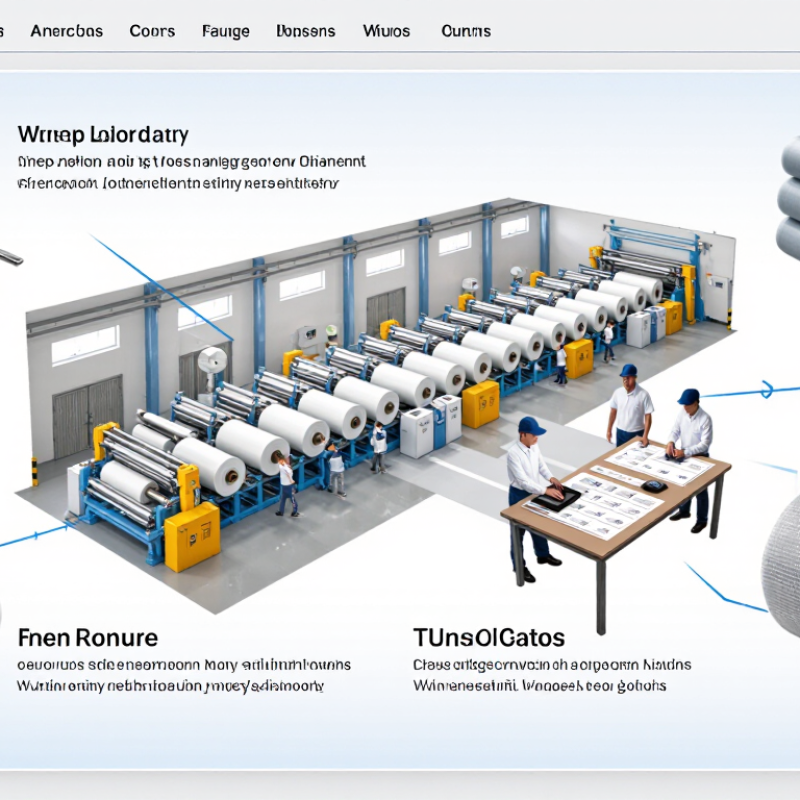
China’s laid scrim mesh fabric is manufactured through controlled yarn placement, bonding, curing, and inspection. The process starts with glass, polyester, or polypropylene yarns. Machines lay warp yarns lengthwise, then place weft yarns across them. Adhesive, powder, or thermal bonding holds the grid together. The coated scrim passes through an oven, where temperature and speed determine bonding strength. Operators then check mesh size, roll tension, edge alignment, and tensile performance.
Market demand supports this technical investment. MarketsandMarkets valued the global nonwoven fabric market at about USD 53.8 billion in 2023. It forecasts approximately USD 72.0 billion by 2028, with a 6.0% compound annual growth rate. This growth encourages Chinese manufacturers to improve automated winding and online inspection. Yet a clean-looking roll can still hide weak bonding. That remains a practical concern.
Tips: Ask for batch-level test records, not only a sample roll. Confirm yarn type, coating weight, mesh tolerance, and curing temperature. Request tensile tests in both directions. Also inspect the roll edges. Small wrinkles can become installation failures. The best supplier should explain process limits honestly, even when the answer is inconvenient.
| Manufacturing or specification dimension | Typical commercial data | How it is handled in China | Recommended quality check |
|---|---|---|---|
| Primary raw materials | Fiberglass, polyester, polypropylene, or other high-tenacity synthetic yarns | The yarn is selected according to tensile strength, flexibility, temperature resistance, chemical exposure, and the intended coating or laminate. | Check yarn type, linear density, moisture condition, appearance, and supplier test documentation. |
| Scrim forming method | Warp and weft yarns are laid at approximately 90° and bonded; the yarns are not traditionally woven over and under each other. | Warp yarns are positioned longitudinally, cross yarns are placed transversely, and an adhesive or polymer binder fixes the grid structure. | Inspect grid alignment, yarn displacement, bond points, and visible gaps across the roll width. |
| Common basis-weight range | Approximately 15–200 g/m², depending on yarn size, mesh spacing, coating, and end use | Production specifications are adjusted by changing yarn count, spacing, and binder add-on. | Measure conditioned samples with a calibrated balance according to an agreed test method. |
| Typical mesh spacing | Common openings range from about 2 × 2 mm to 50 × 50 mm; construction-specific designs may fall outside this range. | Computer-controlled laying and tension control help maintain the specified longitudinal and transverse spacing. | Measure at least ten openings in both directions and calculate the average and variation. |
| Roll width | Common production widths are approximately 1.0–3.2 m, subject to equipment and application requirements. | The laid scrim is slit or wound to the required width after bonding, coating, inspection, and edge trimming. | Check usable width, edge straightness, telescoping, and roll-to-roll width consistency. |
| Roll length | Frequently supplied in approximately 50–1,000 m rolls, depending on material thickness, weight, and handling limits. | Automatic winding and length control are used to produce consistent roll quantities and reduce telescoping. | Verify actual length, splice count, roll diameter, core size, and packaging condition. |
| Binder or coating system | Acrylic, EVA, PVC, polyurethane, starch-based, or other compatible binder systems may be used. | The binder is applied by dipping, spraying, coating, or other controlled methods, followed by drying or curing. | Test bonding strength, coating uniformity, flexibility, odor, residual moisture, and compatibility with the final laminate. |
| Drying and curing | Temperature and residence time are process-specific and must be matched to the binder and yarn. | Multi-zone ovens commonly control drying, curing, and cooling to stabilize the bonded grid before winding. | Check residual moisture, binder cure, dimensional stability, and absence of blocking between layers. |
| Tensile-strength direction | Warp and weft strength are specified separately; values vary widely with yarn type and construction. | Warp and weft yarn counts can be designed independently to meet directional reinforcement requirements. | Test tensile strength and elongation in both directions using the agreed specimen width and test standard. |
| Dimensional stability | The required shrinkage or growth limit is application-specific; coated fiberglass products generally provide high dimensional stability. | Yarn tension, binder cure, oven conditions, and cooling are controlled to reduce distortion during downstream processing. | Measure length and width change after heat, humidity, or application-specific conditioning. |
| Surface appearance | Acceptable material should have a regular grid, consistent color, clean edges, and no significant broken yarns or untreated areas. | Online visual inspection and manual sampling are commonly used before final roll packing. | Use agreed defect limits for holes, wrinkles, stains, loose yarns, missing cross yarns, and uneven coating. |
| Typical applications | Roofing membranes, flexible packaging, adhesive tapes, wall coverings, insulation facings, composite laminates, and construction reinforcement | The construction is adapted to improve tear resistance, dimensional control, puncture resistance, or laminate handling. | Confirm performance using the finished-product test rather than relying only on scrim data. |
| Packaging and storage | Rolls are normally protected with moisture-resistant wrapping and should be stored dry, clean, and away from direct sunlight. | Finished rolls are labeled by specification, batch, length, and production date before shipment. | Inspect packaging integrity, label accuracy, core damage, moisture exposure, and traceability records. |
Note: The figures above are typical industry ranges for laid scrims mesh fabric. Exact specifications should be confirmed through an approved technical data sheet, sample inspection, and application-specific testing.
Laid scrims mesh fabric supports many industries because it adds strength without creating excessive thickness. Its open grid structure allows coatings, adhesives, and laminates to pass through efficiently. Construction manufacturers use it in roofing membranes, wall wraps, insulation facings, and waterproofing sheets. The scrim helps control tearing during installation and long-term service.
Flooring producers often place laid scrim between layers of resilient flooring. This reinforcement improves dimensional stability when temperature or humidity changes. Composite manufacturers also use polyester, fiberglass, or hybrid scrims in panels and laminated sheets. Packaging applications include reinforced sacks, flexible covers, and heavy-duty wrapping materials. Some medical and hygiene products use lightweight scrims as support layers, but softness and skin-contact safety require careful validation.
Every industry needs a different specification. Mesh opening, yarn type, tensile strength, coating compatibility, and roll width can change performance significantly. A supplier evaluation should include sample testing, production records, and clear technical data. It should also review heat resistance and bonding behavior under realistic conditions. A common mistake is choosing fabric by price alone. It needs discipline. In practice, a low-cost scrim may cause delamination, wrinkles, or waste during converting. Even experienced buyers can overlook storage humidity and adhesive interaction. These details deserve review before large-scale production begins.
Common industrial applications ranked by the typical importance of reinforcement, dimensional stability, and tear resistance.
Laid scrims are commonly laminated or coated into roofing membranes, insulation facings, floor coverings, wall coverings, packaging materials, agricultural fabrics, and medical products. The 1–10 index is a normalized comparison of documented application relevance, not a market-share estimate.
Reference basis: publicly documented application areas and performance requirements for laid scrim reinforcement fabrics.
When evaluating a China-based laid scrims mesh fabric supplier, buyers should check measurable quality standards, not only product photos. Ask for the technical data sheet, material composition, yarn count, mesh opening, basis weight, and roll width. These details should match the purchase specification and sample approval.
Strength testing matters greatly. Request machine-direction and cross-direction tensile results, elongation data, and dimensional stability after heat or moisture exposure. For coated scrims, check coating adhesion and resistance to cracking during folding. A reliable supplier should provide recent laboratory reports, batch numbers, production dates, and traceable inspection records. Factory quality systems, such as ISO 9001, can support consistency, but certification alone proves little.
Inspect samples under bright, even light. Look for broken yarns, uneven spacing, loose edges, stains, and hard spots in the coating. Measure several mesh openings with a calibrated ruler or microscope; one measurement is not enough. Buyers should also confirm packaging strength, moisture protection, and roll-length tolerance before shipment. Small details become expensive problems.
In practical purchasing, an independent pre-shipment inspection is valuable. It can compare random rolls against agreed limits for weight, width, appearance, and tensile strength. Do not accept vague phrases like “premium quality.” Some suppliers may send an excellent sample but produce uneven later batches. That risk deserves written standards, retained samples, and a clear claim process. Even careful buyers can overlook storage conditions, which may affect adhesive performance over time.