What Are PVC Cabinets and What Types Are Available?

Pvc Cabinets are often chosen for kitchens, bathrooms, laundry rooms, and other spaces where splashes and humidity are common. The name can describe several constructions, not one identical product. Some cabinets use solid PVC foam boards, while others have a PVC film bonded to a wood-based core. That distinction matters. A cabinet’s performance depends on its core, joints, edge sealing, hardware, and installation—not just its surface finish.

Available types include flat-pack cabinets made from PVC boards, custom-built units, and wood-based cabinets with PVC-wrapped doors or panels. Finishes range from plain white and subtle neutrals to wood-look patterns and glossy colors. In a showroom, check the edges, open a door, and inspect the hinges. These small details can reveal more than a bright sample swatch. Ask the supplier what the cabinet is made of and how shelves are supported, especially if you plan to store heavy cookware. PVC surfaces are generally easy to wipe clean, but they are not immune to scratches, heat, or poor workmanship. Some claims sound broader than the evidence supports. Choosing well means comparing the actual construction, warranty, care instructions, and intended use. This guide explains what Pvc Cabinets are and how the main types differ, so you can judge which option fits your room and daily routine.
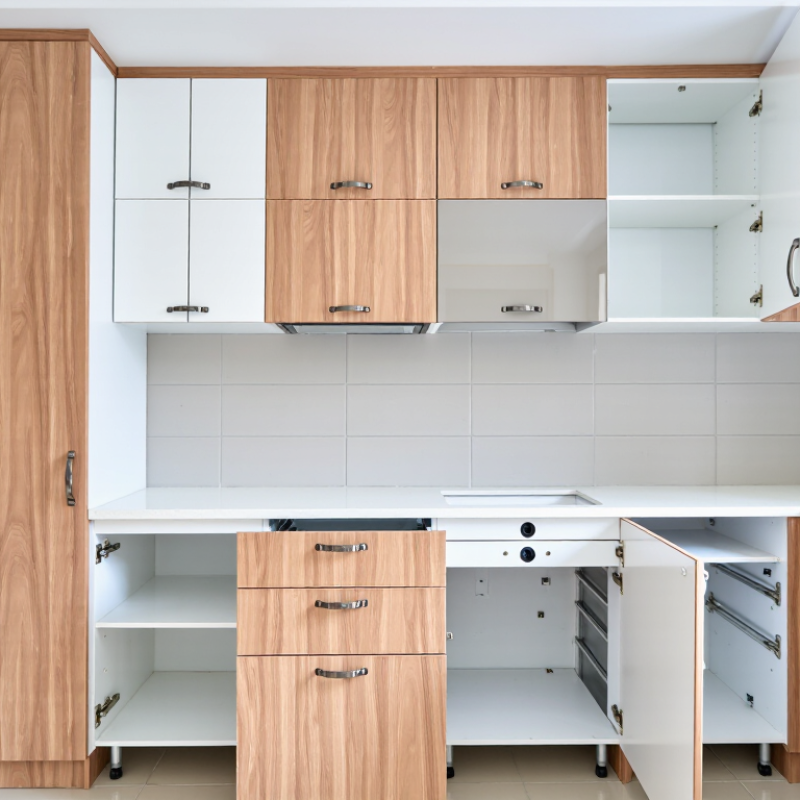
What Are PVC Cabinets and What Types Are Available?

What PVC Cabinets Are

PVC cabinets are cabinets made partly or entirely from polyvinyl chloride, a thermoplastic polymer. The term is broad. It may describe a cabinet built from rigid PVC foam board, solid PVC sheet, or a wood-based panel covered with PVC film. These constructions are not interchangeable. A glossy door wrapped in PVC film, for example, still has a wood-based core.

Rigid PVC foam board is light and can be cut or routed into cabinet parts. Its surface is generally easy to wipe, but moisture performance depends on joints, edges, fasteners, and installation—not just the material name. Look closely at hinge attachment: some boards need inserts or reinforcement to hold screws securely. Heat and sunlight can also affect finishes over time. Not quite a one-material story.

For context, PlasticsEurope’s Plastics—the Fast Facts 2024 reports global plastics production of 413.8 million tonnes in 2023. That figure covers all plastics, not PVC cabinets, so it cannot prove cabinet durability or quality. It does show why material descriptions need precision. Ask whether the cabinet body is PVC throughout, PVC-faced, or a mix, and check the stated board thickness and edge treatment. The label can be confusing; I would not treat “PVC” alone as a performance rating.

Materials and Construction of PVC Cabinets

PVC cabinets are not made from one standard material. Many use rigid PVC foam board throughout the carcass and doors. Others use PVC film bonded to MDF or particleboard. The difference matters. Foam-board panels tolerate everyday splashes, while wrapped panels also depend on the core and adhesive remaining sound. Exposed edges need careful sealing.

PlasticsEurope’s Plastics – the Fast Facts 2023 reports 400.3 million tonnes of global plastics production in 2022, with PVC making up about 12 percent. That figure describes broad material production, not cabinet durability. In foam-board cabinets, panels are commonly fastened with screws or adhesives, and hinge areas may need reinforcement. Construction varies.

Look closely at joints and cutouts. A sink-side screw hole can admit moisture if it is left unsealed. Wrapped panels need intact film around corners; peeling can expose the substrate. Still, “water-resistant” is not the same as maintenance-free. Some PVC boards also feel less rigid than plywood, especially across wide shelves. Ask for panel thickness, edge-sealing details, and hardware load guidance before comparing cabinet types.

Key Properties of PVC Cabinets

PVC cabinets are made from polyvinyl chloride panels or boards, though construction varies by product. Their standout property is moisture resistance. In a steamy bathroom or beside a kitchen sink, the surface will not absorb splashes like untreated wood can. Wipe it dry. Many finishes are smooth and nonporous, so everyday grease and toothpaste usually come off with a soft cloth and mild cleaner.

They are lightweight and do not rust, making installation and routine handling relatively simple. That does not mean every cabinet feels equally sturdy. Panel thickness, internal supports, hinges, and edge sealing all affect how well doors stay aligned under daily use. Check these details, especially for wide shelves holding heavy cookware. PVC can scratch, and prolonged heat may soften or discolor some panels. Keep hot pans and appliances away from the surface.

Color and finish choices range from plain white to wood-look patterns, which can brighten a small room without demanding much upkeep. Yet a printed grain is still a surface finish, not real timber; close inspection may reveal repeating patterns. I would also avoid assuming “water-resistant” means suitable for every wet location. Poorly sealed joints can admit water, and standing moisture still deserves attention. Good installation matters.

Main Types of PVC Cabinets

Main Types of PVC Cabinets

PVC cabinets are grouped by the material used for their doors and cabinet boxes. The term can be confusing. Some cabinets use solid PVC foam boards, while others have a wood-based core covered with PVC film. Checking the panel construction matters more than relying on the label alone.

Foam-board PVC cabinets use lightweight sheets made from expanded polyvinyl chloride. The panels resist moisture and are easy to wipe, which makes them practical near sinks or in laundry rooms. However, they can flex under heavy loads if the board is thin or poorly supported. Ask about panel thickness and shelf reinforcement. Small details count.

PVC-laminated cabinets use MDF, particleboard, or plywood beneath a PVC surface. The film gives doors a smooth, consistent finish and comes in matte, glossy, or wood-look styles. Plywood-backed versions may offer better screw-holding than particleboard, but construction quality varies. Edges deserve a close look; poorly sealed seams may allow moisture to reach the core.

A third common style is the PVC-wrapped door, where a shaped board is covered in heated PVC film. This allows simple routed profiles without separate edge strips. Heat exposure can be a concern around ovens, so placement and installation guidance should be checked. The finish may look seamless, though repairs to peeling film are not always straightforward.

Common Uses and Selection Factors

PVC cabinets are often chosen for kitchens, bathrooms, laundry rooms, and utility areas. Their smooth surfaces are easy to wipe after cooking splashes or toothpaste spills. Many styles use rigid PVC boards, while others have a PVC covering over a different core. The construction matters. A damp room can expose weak edges or poorly sealed joints over time.

When comparing cabinets, check the board thickness, edge finish, hinges, and shelf support. Ask what the cabinet core is made from, and whether the maker specifies limits for heat or direct sunlight. Near a stove, too much heat may cause warping or discoloration. In a bathroom, look closely at corners where water can collect. Storage needs matter, too: deep drawers suit pots, while adjustable shelves fit tall bottles. A glossy door may brighten a small room, but it can show fingerprints. I would not choose by appearance alone; that shortcut is tempting.

Tips: Bring room measurements, including pipe locations, before ordering. Wipe spills promptly, even on moisture-resistant surfaces. Check a sample in your room’s lighting. Some details are easy to miss.

What Are PVC Cabinets and What Types Are Available? - Common Uses and Selection Factors
Type Typical construction Common uses Practical advantages Limitations to consider Selection checks
Solid PVC foam-board cabinets Cabinet panels are made from rigid, cellular PVC board, then cut, joined, and fitted with hardware. Bathrooms, laundry rooms, utility areas, and other spaces where occasional splashes or humid air are expected. The plastic material does not absorb water like untreated wood-based board. It is also easy to wipe clean. Board density, thickness, span, and construction affect stiffness. Heat, impact, and prolonged UV exposure may affect appearance or performance. Check panel thickness and support spacing, edge and joint details, hardware attachment, and the manufacturer’s temperature and cleaning guidance.
Hollow PVC-board cabinets Panels contain internal cavities or ribs to reduce material use and weight; the exact structure varies by product. Light-duty storage, interior utility cabinets, and projects where low weight is useful. Often lighter than comparable solid panels and resistant to moisture-related swelling of the panel itself. Hollow sections can affect screw holding, edge finishing, and resistance to concentrated loads. Not every design is suitable for heavy shelves or doors. Ask how hinges, handles, and shelf supports are secured, and confirm the rated load for shelves and doors.
PVC-laminated wood-based cabinets MDF or particleboard panels are faced with a PVC decorative film or laminate. The core remains wood-based. Kitchen and bedroom cabinetry, wardrobes, and other dry or moderately humid interior spaces, depending on the panel and edge treatment. Provides a smooth, decorative surface in a range of colors and finishes; the underlying panel can be engineered for cabinetry. The facing does not make the entire panel waterproof. Moisture entering through damaged edges, seams, or cut-outs can affect the core. Identify the core material, inspect edge sealing and cut-outs, and match the product’s moisture rating to the room and expected exposure.
PVC-wrapped cabinet doors and profiles A shaped wood-based door or profile is covered with a PVC film, commonly using a formed or wrapped finish. Decorative door fronts, drawer fronts, and trim in indoor cabinetry. Can cover shaped surfaces with a continuous decorative finish and reduce the need for separate painted detailing. Film adhesion and durability depend on manufacturing quality and conditions. Heat and steam near appliances can be a concern for some products. Check heat-clearance recommendations, finish warranty terms, and whether the film is suitable for the cabinet’s location.

What “PVC cabinet” means: The term may describe cabinets made from PVC board or cabinets with a PVC surface over a different core. These constructions do not have identical moisture resistance, strength, or repair requirements.

Before choosing: Consider moisture exposure, expected loads, panel and edge construction, hardware attachment, heat and sunlight, cleaning needs, and installation quality. A moisture-resistant panel does not automatically make every joint, fitting, or cabinet assembly waterproof.