How to Buy Freeze Dried Strawberries in Bulk

Buying Freeze-Dried Strawberries in bulk looks simple until quality differences become visible. One supplier may offer bright red slices, while another delivers dusty, soft pieces. The difference often appears after opening the carton. Moisture, packaging, harvest conditions, and processing temperature all matter.

Grand View Research valued the global freeze-dried food market at approximately $2.99 billion in 2023. Its report also forecasts continued growth through 2030. Research and Markets reports similar expansion, driven by snacks, cereals, bakery products, and emergency food applications. These figures show rising demand, but they do not guarantee consistent supplier quality. Buyers still need evidence.

Dr. R. Paul Singh, a respected food-processing scientist, describes the core principle clearly: “The objective is to remove water while preserving quality.” That principle should guide every purchase. Ask for water activity results, microbiological certificates, ingredient specifications, and a recent production date. Check whether the package uses high-barrier film with oxygen protection. A crushed sample may signal poor handling, not poor freeze-drying. Sometimes, the lowest quote becomes the highest cost.

Compare whole slices, crumble, powder, and different grades separately. Calculate the delivered cost per usable kilogram, not merely the advertised carton price. Request a sample before committing to a pallet. Taste it after ten minutes in yogurt or granola. Notice the color, aroma, crunch, and rehydration behavior. A reliable supplier should explain origin, lot tracking, shelf life, and storage requirements without hesitation. The data may look excellent. Your sample should still prove it.

How to Buy Freeze Dried Strawberries in Bulk

Define Bulk Freeze-Dried Strawberries and Their Common Uses

How to Buy Freeze-Dried Strawberries in Bulk

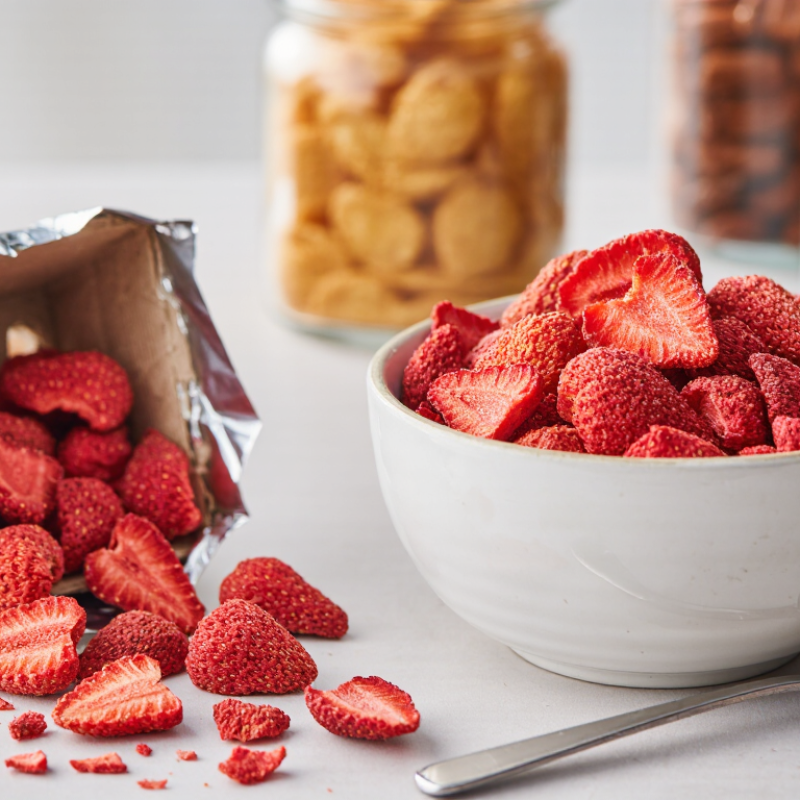
Bulk freeze-dried strawberries are strawberries processed to remove moisture at low temperatures. This method preserves their crisp texture, bright color, and concentrated fruit flavor. “Bulk” usually means a larger food-service bag, carton, or case rather than a small retail pouch. Pack sizes vary widely between suppliers, so confirm the exact net weight before comparing prices. The pieces may be whole, sliced, diced, or powdered. That difference matters.

They are commonly used in cereal, granola, trail mixes, and snack blends. Bakers fold sliced berries into cookies, muffins, and chocolate products. Powdered strawberries can add color and flavor to frosting, smoothies, yogurt, and dessert fillings. Some kitchens crush them over oatmeal or blend them into homemade drink mixes. They are lightweight and shelf-stable when sealed correctly. Still, they are not interchangeable in every recipe. Whole pieces add texture, while powder can absorb moisture quickly.

Check the ingredient list carefully. It should clearly identify strawberries and any added ingredients. Ask for moisture-control packaging, production dates, lot information, and storage guidance. Food businesses should also review allergen handling and quality documents. A practical test is simple: sample a small quantity before ordering a full case. I once underestimated how quickly opened fruit softened in a humid kitchen. That mistake was avoidable. Resealable packaging helps, but a dry storage area matters more. Bulk purchasing saves money only when the fruit is used before quality declines.

Determine the Right Quantity, Quality, and Packaging Requirements

How to Buy Freeze Dried Strawberries in Bulk

Estimate quantity from actual use, not supplier discounts. A 10-gram serving fills a small cereal bowl topping, while bakery recipes may require 20–30 grams. Multiply weekly consumption by your lead time, then add 5–10% for breakage and testing. A 2024 Grand View Research analysis valued the global freeze-dried fruits market at approximately $8.65 billion in 2023, with projected growth through 2030. Demand is rising, but bigger orders still create waste when storage is weak.

Define quality before requesting quotations. Specify whole berries, slices, or powder; target color; acceptable broken pieces; and minimum pack weight. Ask for a recent certificate of analysis covering moisture, microbial results, foreign-material controls, and lot traceability. USDA FoodData Central shows that dried fruit is highly concentrated by weight, so serving sizes can be surprisingly small. I once underestimated this point and ordered too much product for a trial run. The packaging looked efficient, but the opened cartons lost crispness quickly.

Choose sealed, high-barrier packaging with strong protection from oxygen, light, and moisture. Smaller inner bags usually protect quality better than one large opened sack. Request nitrogen flushing only when the supplier documents the process and seal integrity. Check carton dimensions, pallet counts, storage temperature, and recommended shelf life. Keep a retained sample from every lot. It makes quality disputes less subjective.

Bulk is not automatically economical.

Compare Suppliers, Product Specifications, and Bulk Pricing

How to Buy Freeze Dried Strawberries in Bulk

Comparing suppliers starts with more than the lowest quote. Ask about strawberry origin, harvest season, and processing location. A reliable supplier should provide a recent specification sheet and certificate of analysis. Check moisture content, piece size, color, flavor, and microbial limits. These details affect texture, safety, and customer acceptance. I prefer samples from the same production lot whenever possible. A sample can look excellent while the next lot differs slightly.

Packaging deserves close attention. High-barrier bags, sealed cartons, and clear lot coding help protect the fruit during storage. Confirm the net weight, shelf life, storage temperature, and transport conditions. Some suppliers offer whole berries, slices, or powder. Each format suits a different use. Slices may work for cereal, while powder suits drink mixes and bakery fillings.

Bulk pricing needs careful calculation. Compare the price per kilogram, not only the carton price. Include freight, sample fees, customs charges, and minimum order quantities. Request prices for several volume levels, such as 25, 100, and 500 kilograms. Payment terms can also change the real cost. My first comparison ignored delivery fees, so the “cheapest” offer was not cheapest at all. That mistake still influences how I review quotations. Ask whether damaged cartons, shortages, or quality disputes have a documented resolution process. A dependable supplier answers clearly, even when the answer is inconvenient.

Evaluate Storage Conditions, Shelf Life, and Shipping Options

Buying bulk freeze-dried strawberries starts with storage, not carton size. Ask for water activity, packaging material, lot date, and storage instructions. A 2023 review in Foods identifies moisture, oxygen, light, and heat as major quality threats to dried fruit. Choose unopened pouches with high-barrier films, oxygen absorbers, and intact seals. Keep them below 21°C, away from sunlight and steam. A cool cupboard works. A garage may not.

Shelf life needs two dates: best quality and safety. The USDA FoodKeeper database lists dried fruit at roughly six to twelve months in a pantry. Freeze-dried products may carry longer supplier warranties when sealed correctly. Treat those claims as conditional, not guaranteed. Request stability data, not only a printed “25-year” promise. After opening, reseal the pouch immediately. Use a desiccant when appropriate. Parcel shipping suits smaller cartons. Freight can reduce cost per kilogram but increases handling exposure. During hot seasons, choose faster transit or temperature-monitored service. Ask for tracking, insurance, carton dimensions, and delivery temperature limits. The final mile is often the weak point.

Tips: Buy one test case first. Weigh a sample before and after opening. Soft, sticky berries suggest moisture pickup. Reject crushed or unsealed cartons. I would compare delivered cost, not the advertised bulk price. That calculation is easy to miss.

Place a Bulk Order and Inspect the Strawberries Upon Delivery

How to Buy Freeze Dried Strawberries in Bulk

A bulk order should begin with clear product requirements. Specify slice size, berry variety, moisture level, packaging format, and expected shelf life. Ask for the harvest or production lot, ingredient statement, allergen information, and available food-safety documents. A small trial order can reveal more than a polished product description. Check the berries for bright color, a clean fruit aroma, and a crisp texture. They should not feel soft, sticky, or unusually dark.

Place the larger order only after confirming these details in writing. When the shipment arrives, inspect the outer cartons before opening them. Look for crushed corners, water marks, broken seals, or signs of heat exposure. Photograph damaged packaging immediately. Open several cartons from different pallets, not just the top box. Check the inner pouches for holes and compare the lot codes with the invoice. Weigh a few samples if consistency matters. I once focused too heavily on appearance and overlooked uneven texture between cartons. That was a useful, but avoidable, mistake.

Tips: Keep questionable cartons separate until reviewed. Do not mix new stock with older inventory. Store sealed bags in a cool, dry, dark area. Use clean gloves during inspection, and record color, aroma, texture, package condition, and inspection time. If the berries arrive soft or smell fermented, pause use and contact the supplier with clear photos and lot details.

How to Buy Freeze Dried Strawberries in Bulk - Place a Bulk Order and Inspect the Strawberries Upon Delivery
Buying Dimension Recommended Specification What to Confirm Before Ordering Inspection Upon Delivery Action if the Requirement Is Not Met
Order quantity Select a quantity that matches expected usage and storage capacity. Common bulk case sizes include 5 lb, 10 lb, 25 lb, and 50 lb, but the actual pack size varies by supplier. Confirm the net weight per case, number of inner bags, minimum order quantity, and whether partial cases are allowed. Weigh an unopened case or package and compare the measured net product weight with the packing list. Record any shortage, photograph the label and packaging, and request a credit, replacement, or corrected shipment.
Product form Whole, sliced, diced, or powdered strawberries should be selected according to the intended use. Whole and sliced pieces generally provide more visible fruit texture; powder is suited to mixes, fillings, and beverages. Specify the cut size, allowable fines, and whether the product contains seeds, stems, or other strawberry parts. Check that the delivered pieces match the ordered form and that the package does not contain excessive powder or crushed pieces. Separate nonconforming product, document the percentage affected, and contact the seller before using the lot.
Ingredient profile For a single-ingredient product, the ingredient statement should list strawberries only. Products with added sugar, oils, colors, or preservatives should be clearly identified before purchase. Request the ingredient statement, allergen statement, nutrition facts, and any processing-aid information relevant to your application. Compare the physical label with the agreed specification and verify that the package is marked for the correct product. Place the shipment on hold if the ingredient declaration differs from the purchase specification or regulatory requirements.
Moisture and texture The product should be dry, light, crisp, and easy to break rather than leathery, sticky, or flexible. A supplier should provide a moisture specification or certificate of analysis for each lot when required. Ask for the target moisture limit, test method, and lot-specific certificate of analysis. Do not rely on appearance alone. Open a sample from multiple cases. Look for crisp texture, no wet clumps, and no visible condensation inside the package. Do not blend a suspect lot with acceptable inventory. Seal the sample, document the condition, and request laboratory or supplier review.
Color and appearance Pieces should have a generally uniform red to pink color appropriate to the fruit and process. Natural variation is normal; unusually dark, pale, or uneven pieces may indicate age, oxidation, or processing variation. Agree on acceptable color variation, size range, broken-piece tolerance, and foreign-material controls. Inspect under good lighting for mold, insect damage, unusual darkening, foreign material, or signs of moisture exposure. Quarantine the affected lot and report any suspected contamination or foreign material immediately.
Packaging barrier Packaging should protect the product from moisture, oxygen, light, and physical damage. Resealable high-barrier bags, sealed liners, or nitrogen-flushed packs may be used depending on the application. Confirm packaging material, inner-bag count, seal type, case strength, and whether oxygen absorbers are included. Check for punctures, broken seals, tears, swelling, wet cartons, crushed cases, and damaged oxygen absorbers if supplied. Photograph all damage before disposal and notify the carrier and seller according to the delivery-claim procedure.
Lot traceability Every case should be traceable to a production lot and date. Traceability supports stock rotation, complaint investigation, and targeted recalls. Request the lot number, production or packing date, best-before date, country of origin, and certificate of analysis availability. Verify that the lot code is legible and matches the invoice, packing list, and accompanying documentation. Hold product with missing or unreadable traceability information until the seller provides written confirmation.
Shelf life Use the supplier's stated shelf life and storage instructions; unopened freeze-dried fruit commonly requires a cool, dry, protected environment. Shelf life depends on moisture control, oxygen exposure, packaging, and storage conditions. Confirm the remaining shelf life at delivery and set a minimum acceptable period, such as 75% of the stated shelf life. Compare the best-before date with the purchase agreement and inspect for packaging damage that could shorten shelf life. Request approval before accepting short-dated goods, or ask for replacement, discount, or return authorization.
Storage after opening Reseal opened packages immediately and store them in a cool, dry place away from direct light and strong odors. Use clean, dry utensils and avoid repeatedly opening the container in humid conditions. Ask for the recommended temperature, relative-humidity guidance, resealing method, and post-opening use period. Confirm that the product remains crisp after opening and that no moisture has accumulated during handling or transport. Discard product showing mold, off-odors, wet clumping, or other signs of spoilage; do not attempt to re-dry it.
Food-safety documentation Documentation should be appropriate for the intended market and use. Depending on the buyer and jurisdiction, this may include a certificate of analysis, allergen statement, process information, and food-safety certification. Define required documents before payment, including microbiological results when the risk assessment or customer specification requires them. Check that documents identify the same product, lot, production date, and specification as the delivered shipment. Place the goods on hold until missing or inconsistent documentation is corrected and reviewed.
Sampling plan Inspect more than one package and, for large shipments, sample cases from different pallet positions. A practical receiving check should cover packaging, identity, weight, appearance, odor, and texture. Agree on the sampling quantity, acceptance criteria, and who pays for independent testing if a dispute occurs. Record case numbers, sample locations, observations, weights, photographs, and the receiving date. Keep representative samples and preserve all records until the order is formally accepted.
Freight and delivery Use clean, dry transport with protection from rain, condensation, heat, and crushing. Freeze-dried strawberries do not normally require frozen transport, but moisture and heat exposure should be minimized. Confirm delivery appointment, pallet configuration, freight insurance, temperature or humidity requirements, and damage-claim deadlines. Inspect the truck or delivery area when possible, then check cartons and pallets before signing for an undamaged shipment. Note visible damage on the delivery receipt and notify the carrier and seller within the stated claim period.
Acceptance decision Accept only when identity, quantity, packaging, documentation, and quality are consistent with the purchase specification. Define three outcomes in advance: accepted, accepted with deviation, or rejected and placed on hold. Complete a receiving report and assign inventory status to every lot. Use a written nonconformance report and retain the product in a clearly identified quarantine area.