Choosing the right Plastic Bag can influence product safety, customer experience, operating costs, and environmental performance. A grocery store may need strong bags for bottles, while a bakery may require clean, food-contact packaging. A clothing retailer could prioritize appearance, handles, and easy storage. The correct choice depends on the product, weight, moisture, transport distance, and disposal conditions.
Start with practical evidence from daily operations. Test the bag with real products, not empty samples. Observe stretching, leaking, tearing, and handle comfort. Measure the actual load. Small details matter. A thin bag may reduce material use, but it can create more waste when products spill or bags fail. Thickness alone does not prove quality.
Material selection also deserves careful review. Polyethylene types, recycled content, compostable options, and reusable designs perform differently. Claims should be supported by supplier documents and recognized testing methods. Check food-contact suitability when packaging touches food. Confirm that printing inks, closures, and additives match the intended use. Applicable packaging, labeling, recycling, and workplace requirements should guide the final decision.
Supplier reliability is equally important. Ask for specifications, batch consistency, test reports, and traceable production information. Request samples from different production runs. An attractive sample may not represent everyday performance. That is an easy mistake to make.
The best solution balances strength, cost, appearance, user safety, and responsible disposal. It may not be the cheapest option. It may not be the most sustainable in every situation. Review performance regularly, collect staff feedback, and adjust the Plastic Bag choice as business needs change.
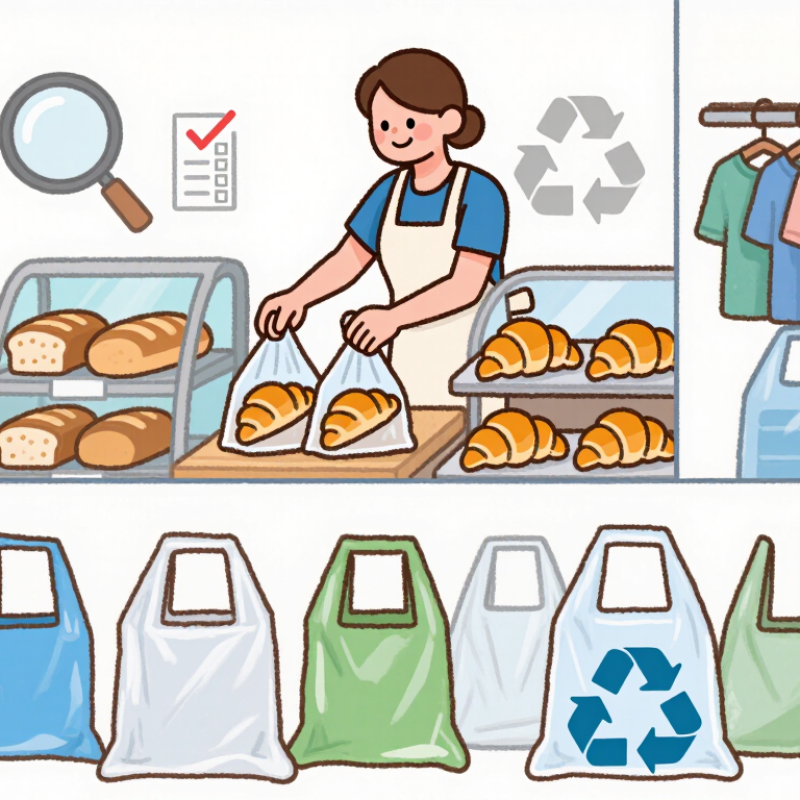
Choosing the right plastic bags starts with understanding your daily operations. A bag for bakery items needs different performance than one for sharp hardware parts. List the product’s weight, shape, moisture, temperature, and surface texture. Measure the usual load, not only the largest possible one. A bag that is too large wastes material and looks untidy. A bag that is too small may split during packing.
Think about how staff and customers will handle each bag. Will it hang from a hook, sit in a freezer, or travel in a delivery vehicle? Consider seal strength, thickness, flexibility, transparency, and storage space. I once selected a thicker bag for extra protection, but it slowed packing and increased material use. That assumption was wrong. Real usage conditions matter more than specifications alone. Test samples during normal work, including busy periods and uneven loading.
Tips: Create a simple usage checklist. Record product weight, bag dimensions, storage temperature, carrying distance, and closure method. Test filled bags for leaks, stretching, and tearing. Ask packing staff for honest feedback. They notice small problems first. Also check whether the material suits your product and meets applicable local packaging requirements. Do not judge performance from one trial only. Repeated testing gives more reliable results.
Material affects flexibility, clarity, tear resistance, and cost. LDPE bags feel soft and stretch around uneven products. HDPE bags are firmer and often perform well with sharp edges or heavier loads. Recycled-content bags can support sustainability goals, but their strength may vary by formulation. Compostable options require careful storage and suitable disposal conditions. Do not trust labels alone. Request technical data and test samples with your actual products.
Strength depends on more than thickness. A 30-micron bag may outperform a thicker bag if its film quality and seams are better. Check the bottom seal, handle area, and corners first. Fill each sample with the intended weight, then lift, stack, and gently drag it across a typical surface. Watch for stretching, pinholes, and sudden seam failure. Small tests reveal expensive mistakes.
Size should leave enough room for the product and a practical closure. Measure length, width, and height, including irregular edges. A bag that fits tightly may split during packing. One that is too large wastes material and looks untidy. Allow extra space for handles or folded tops. In real packing areas, workers need a little clearance. Fit matters. I have found that theoretical measurements sometimes fail at the packing table, especially when products change shape or arrive in mixed sizes. Recheck samples during production, not only during purchasing.
Choosing plastic bags for a business requires more than comparing prices. Start with the product’s weight, shape, moisture, and handling conditions. A thin bag may suit lightweight clothing, but heavier goods need stronger film and reinforced seams. Measure the item carefully. Extra space improves packing, yet too much film can look careless and increase material use.
Closures affect speed and customer experience. Drawstrings work well for reusable storage, while adhesive flaps provide quick, neat sealing. Zipper closures support repeated access, but they can raise costs and complicate recycling in some systems. Test each option with real products. A closure that feels convenient in the office may fail on a busy packing line. Small details matter.
Customization should support function, not only appearance. Choose printing that remains clear against the bag’s surface and keeps essential information readable. Consider handles, gussets, tear lines, and transparent windows before adding decorative elements. I have seen attractive bags become awkward because the handle cutout pinched fingers. That mistake is easy to miss on a screen. Request samples, fill them fully, and check seams, closure strength, storage space, and delivery consistency. Confirm material claims with documentation, and review applicable packaging requirements in your market. Do not assume “recyclable” means every local facility accepts it.
Choosing plastic bags for a business involves more than size, color, and price. Safety standards should guide every purchase. Ask suppliers for food-contact certificates, material specifications, and recent test reports. For retail or food packaging, check whether the bag suits direct contact, heat, moisture, or freezing. A thin bag may tear beside a sharp product. That small failure can damage goods and customer trust.
Sustainability requires practical evidence, not attractive claims. Compare recycled content, bag thickness, reuse potential, and disposal options in your area. A lightweight bag can reduce material use, but it may create more waste if customers use it once. Check whether local facilities actually accept the stated material. Legal requirements also vary by country, region, and product type. Confirm labeling rules, thickness limits, recycling marks, and possible restrictions with an official authority or qualified compliance adviser. Requirements change, and old supplier documents may no longer be enough.
Tips: Keep certificates with purchase records. Request samples and test them with real products, including wet or heavy items. Inspect seams after storage and transport. Ask who is responsible when specifications change. Do not rely on the word “eco-friendly” alone. I have found that clear documentation prevents more problems than attractive packaging. Still, testing only one sample is not perfect; temperature, loading habits, and staff handling can expose weaknesses later. Choose a bag that meets verified safety and legal requirements, then review its performance regularly.
Compare bag materials and intended uses, then verify food-contact suitability, environmental claims, and rules in every place where the bags will be distributed.
| Bag type or material | Common business uses | Safety and performance checks | Sustainability considerations | Legal and purchasing checks |
|---|---|---|---|---|
| HDPE (high-density polyethylene) | Lightweight checkout bags, produce bags, and liners where the required strength and design are appropriate. | Confirm load capacity, seam strength, dimensions, and suitability for the intended product. For food contact, request documentation for the specific material and use. | Polyethylene can be mechanically recycled where suitable collection and processing exist. Local acceptance varies; check the recycling program rather than relying on the resin type alone. | Check local restrictions on checkout bags, including any minimum thickness, fee, or reusable-bag provisions. Rules differ by jurisdiction and may change. |
| LDPE / LLDPE (low-density polyethylene / linear low-density polyethylene) | Flexible packaging, garment bags, mailers, and bags requiring stretch or puncture resistance. | Specify thickness and test the finished bag for puncture resistance, seal integrity, and performance at the expected temperature and load. | Some collection schemes accept clean polyethylene film separately from curbside recycling. Confirm the local route; film can cause problems in some sorting systems. | Verify applicable packaging, labeling, and producer-responsibility requirements. Do not describe a bag as recyclable unless the claim is supported for the market where it is sold. |
| Recycled polyethylene | Non-food-contact bags and packaging where the supplier can meet the required quality and performance specifications. | Ask for recycled-content documentation, material specifications, and relevant contaminant or quality controls. Food-contact use requires specific regulatory compliance; recycled content alone does not establish suitability. | Can reduce demand for virgin resin when it genuinely replaces virgin material. Request evidence for the stated recycled-content percentage and clarify whether it is pre- or post-consumer content. | Substantiate environmental and recycled-content claims under applicable advertising and labeling rules. Keep supplier records and claim calculations. |
| Food-contact plastic bag | Packaging for foods, ingredients, or food-contact applications when the bag is designed and authorized for that use. | In the United States, applicable food-contact requirements may include FDA regulations such as 21 CFR 177.1520 for certain olefin polymers. In the EU, plastic food-contact materials are subject to Regulation (EU) No 10/2011 and broader food-contact rules. Confirm the exact material, food type, contact conditions, and migration requirements. | Use only environmental claims that are accurate for the product and local disposal infrastructure. Food residue can affect recycling options. | Obtain a declaration or other required compliance documentation where applicable. Requirements depend on the market and the intended conditions of use. |
| Compostable plastic bag | Selected organic-waste collection programs or applications designed for an available composting facility. | Check that the certification applies to the complete finished item and the relevant composting conditions. ASTM D6400 and EN 13432 are examples of standards used for industrially compostable plastics and packaging; they do not mean home compostability. | Industrial compostability is useful only where a suitable facility accepts the item. Compostable plastics are not necessarily suitable for conventional plastic recycling or home composting. | Check local acceptance rules and applicable labeling or environmental-claim laws. Avoid unqualified claims such as “compostable” if disposal conditions are not made clear. |
| Reusable plastic bag | Repeated shopping or transport use when the bag is designed to withstand multiple trips. | Set measurable requirements for load, handle strength, seam durability, and expected reuse. Make clear care or reuse instructions where relevant. | Environmental performance depends on material, manufacturing, actual reuse, and end-of-life route. A reusable label alone does not establish a lower impact. | Check local definitions and minimum specifications for reusable bags, as well as any fees, distribution limits, or required consumer disclosures. |
Choosing plastic bags by unit price alone can make a budget look better than it is. Calculate the cost per usable bag, including freight, storage, printing, and rejected stock. A slightly thicker bag may cost more but prevent handle tears when staff pack heavy items. Test samples with your actual products, not just an empty hand. Small detail, real difference.
Ask suppliers for written specifications covering dimensions, material thickness, weight capacity, and tolerances. Request quotes at more than one order volume, and check how price changes when shipping or raw-material costs shift. Clarify payment terms, lead times, minimum quantities, and who pays for defective bags. Keep the answers in one comparison sheet. It is less exciting than a sales call, but more useful later.
Supply reliability needs evidence, not promises. Ask whether the supplier can share recent delivery performance and explain how they handle production delays or material shortages. Confirm that a backup production plan exists, and consider holding a modest safety stock based on your weekly use and replenishment time. I would not overstock just to feel secure; bags take space, and designs can change. Review actual consumption every few months, then adjust order timing before shelves run low. A dependable supplier is one whose limits are clear, not one who claims nothing can go wrong.