How to Choose the Best Home Deck Oven for Your Baking Needs?
Choosing the right home deck oven is crucial for any baking enthusiast. It can make or break your baking experience. A home deck oven provides consistent heat, which is essential for perfect pastries and breads. There are various models available, each with different features. You might feel overwhelmed by the options.
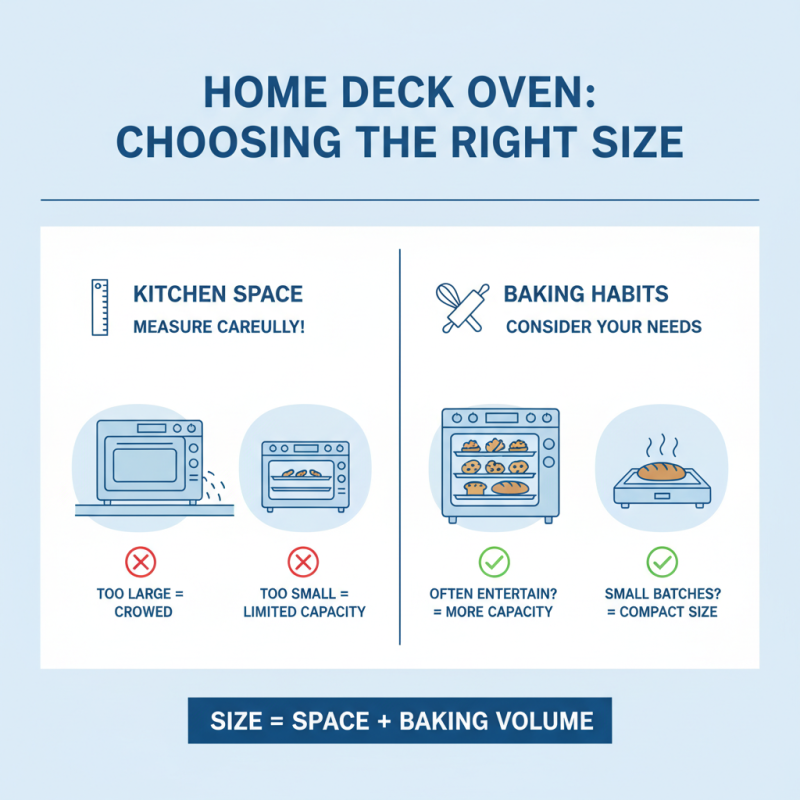
Consider your baking needs. Do you plan to bake bread or pastries? The size of your kitchen might also limit your choices. Think about how much you bake. A larger oven may be needed for frequent bakers. But, a compact model could be better if you bake occasionally. Reflect on your priorities.
Research is essential. Look into brands, user reviews, and features that suit your style. Not all home deck ovens perform the same. Some may struggle at high temperatures. Pay attention to warranties, too. A good warranty can save you trouble later. You'll need to invest time to find the best match.
Understanding Different Types of Home Deck Ovens for Baking
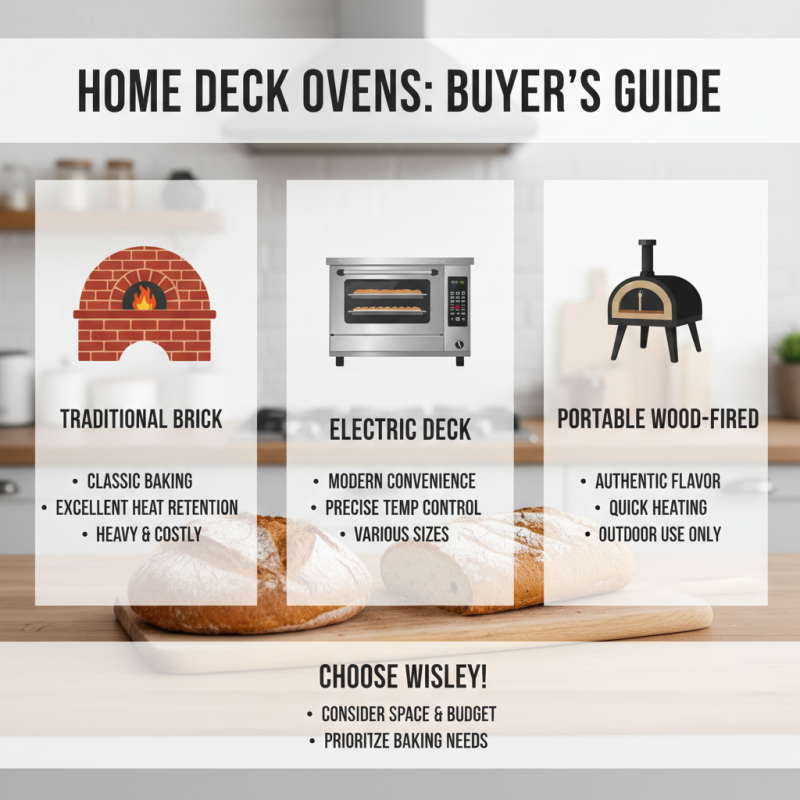
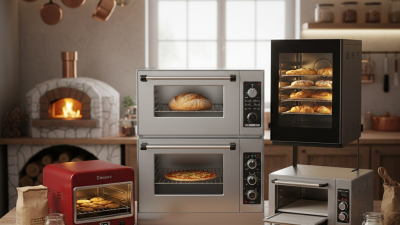
When choosing a home deck oven, it's crucial to understand the different types available for baking. Each type offers unique features. Traditional brick ovens provide a classic experience. They retain heat well, ensuring even baking. However, they can be heavy and expensive. Consider your space and budget before diving in.
Electric deck ovens are popular for their convenience. They heat evenly and require less maintenance. These ovens are easier to use, but it can be challenging to replicate the authentic flavor of a brick oven. Take time to think about what matters most to you—flavor or ease of use.
Tips: Look for a model with adjustable temperature settings. This feature helps you achieve the perfect crust. Also, prioritize easy-to-clean surfaces. Cleanup can be a hassle if the design isn’t practical. Remember, finding the right oven is a journey. You might not find the perfect one on the first try. Reflect on your baking needs and preferences; it’s okay to experiment along the way.
Evaluating Heating Methods: Convection vs. Traditional for Even Baking
When selecting a home deck oven, understanding the heating methods is crucial. Convection ovens circulate hot air around the food. This ensures even baking. According to a report by the American Association of Bakers, convection ovens can reduce baking times by up to 25%. They also promote uniform browning. However, not all recipes are suited for convection cooking. Some delicate items may puff up too quickly or dry out.
On the other hand, traditional ovens rely on radiant heat. They often provide a more stable environment, which can be beneficial for certain baked goods. A study published in the Journal of Culinary Science revealed that traditional ovens allow for better moisture retention. This makes them ideal for breads and custards. However, they may require more frequent rotations to avoid hot spots and uneven baking.
Both methods have strengths and weaknesses. Convection might overbake cookies, while the traditional oven can yield inconsistent results without proper monitoring. Evaluating your baking style is essential. Consider what you commonly bake to make the best choice for your kitchen. Experimenting with both methods may help you discover what works best for your specific baking needs.
How to Choose the Best Home Deck Oven for Your Baking Needs? - Evaluating Heating Methods: Convection vs. Traditional for Even Baking
| Feature |
Convection Oven |
Traditional Oven |
| Heating Method |
Hot air circulation |
Radiant heat |
| Baking Time |
Faster, 25% shorter |
Standard time |
| Baking Consistency |
Even baking |
Potential hot spots |
| Energy Efficiency |
More efficient |
Less efficient |
| Best For |
Pastries, cookies |
Breads, roasts |
| Price Range |
$$$ |
$$ |
Assessing Energy Efficiency Ratings for Home Deck Ovens
When selecting a home deck oven, assessing energy efficiency ratings is crucial. These ratings inform you how much energy the oven uses during operation.
Look for models with high efficiency scores. They save money on electricity bills. Additionally, a more efficient oven heats up faster, which can cut your baking time.
Pay attention to the type of insulation. Good insulation keeps the heat inside. This helps maintain consistent temperatures. Some ovens may look appealing, but poor insulation can lead to energy loss. Check user reviews to see if any common issues arise.
Tips: Always compare energy ratings. Analyze your baking frequency. If you bake often, an efficient oven is worth the investment. Think about the space and your budget. Research can lead you to an oven that suits your needs well. Do not rush—taking time can help avoid future regrets.
Comparing Price Points: Budget vs. High-End Deck Ovens in the Market
When choosing a home deck oven, consider your budget carefully. There are various price points. Budget-friendly options can be great for casual bakers. They usually have simpler features. Yet, they often lack the precise temperature control needed for artisan baking. If you value versatility, think about spending more.
High-end deck ovens offer advanced features. They can give you better heat retention and steam injection capabilities. This ensures a crisp crust and perfect crumb. However, they come with a steep price tag. Investing in a high-end oven means making a commitment. Not everyone needs all that power for everyday baking. You might wonder if those extra features justify the cost.
While budget options may suffice, they might frustrate serious bakers. The heat distribution may be uneven. Baking bread could become a trial in patience. On the other hand, high-end models can feel overwhelming for beginners. They often come with complicated settings. Finding the right balance is key. Consider your skill level and baking goals. Think deeply about your choices before making a decision.