Top Outdoor Litter Bins for Global Buyers?

Choosing the right Outdoor Litter Bins is a practical infrastructure decision, not merely a design exercise. The World Bank’s What a Waste 2.0 report estimated 2.01 billion tonnes of municipal solid waste in 2016. It projects 3.40 billion tonnes annually by 2050. Public spaces will face greater pressure.

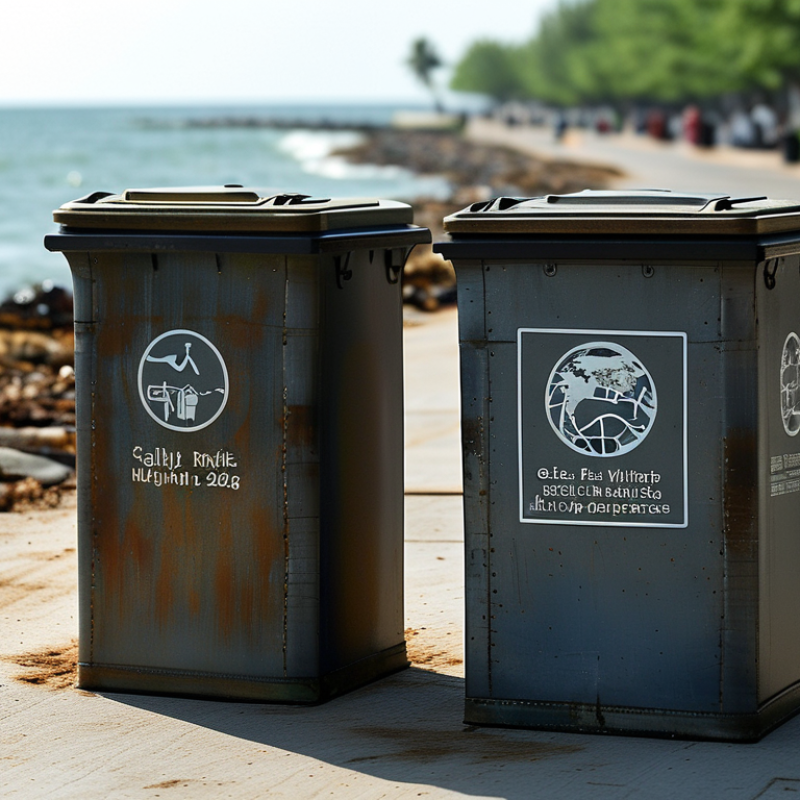
Global buyers must examine capacity, weather resistance, collection access, and placement flexibility. A coastal promenade needs corrosion-resistant materials and secure lids. A busy transit station may require fire-conscious construction, tamper resistance, and fast servicing. Parks often need animal-resistant openings, stable bases, and clear waste-stream labels. The UN Environment Programme’s Global Waste Management Outlook 2024 reports approximately 2.1 billion tonnes of municipal solid waste generated in 2023. It warns that this could reach 3.8 billion tonnes by 2050 without stronger action.

Material claims also deserve careful review. Recycled plastic can reduce virgin material use, while galvanized steel may provide stronger impact resistance. Neither option is automatically superior. Climate, cleaning chemicals, ultraviolet exposure, and repair access change the result. Compliance with relevant local standards remains essential, especially for accessibility, fire safety, and public-space installation. Certifications should be verified, not simply displayed.

This guide compares Outdoor Litter Bins for municipalities, contractors, retailers, and facility managers. It considers durability, hygiene, capacity, aesthetics, maintenance, and total ownership cost. A polished finish is not enough. Poorly positioned bins still overflow. Small openings may reduce contamination but frustrate users. That trade-off deserves honest attention. The strongest choice is the bin that works reliably in its actual environment, not the model that looks impressive in a catalogue.
Top Outdoor Litter Bins for Global Buyers?

What Outdoor Litter Bins Are and Why They Matter

What Outdoor Litter Bins Are and Why They Matter

Outdoor litter bins are weather-resistant containers designed for parks, streets, campuses, transport areas, and commercial sites. They control loose waste before wind, rain, and wildlife spread it. A well-placed bin also supports safer walking routes and cleaner public spaces. However, a bin is not automatically effective. Capacity, opening size, drainage, fire resistance, and collection access must match local conditions.

The World Bank’s What a Waste 2.0 report estimated 2.01 billion tonnes of municipal solid waste were generated globally in 2016. Without stronger systems, this figure could reach 3.40 billion tonnes by 2050. UNEP also reports that about 11 million tonnes of plastic enter aquatic ecosystems each year. These figures make outdoor bin design a practical infrastructure issue, not merely a visual concern. In procurement work, I have seen attractive bins fail because narrow openings trapped cups and poorly anchored units tipped in strong wind. That is an uncomfortable lesson. Appearance alone is not performance.

Tips: Choose UV-resistant materials, covered openings, and removable liners. Check collection frequency before selecting capacity. Place bins near entrances, seating, food areas, and decision points. Use clear labels, but avoid relying on labels alone. Measure overflow during busy periods. Small trials can reveal weaknesses before a large purchase. Consider accessibility, cleaning time, and replacement parts. The best specification may still need revision after real-world use.

Key Types of Outdoor Litter Bins for Different Public Spaces

Top Outdoor Litter Bins for Global Buyers?

Outdoor litter bins should match the public space, not merely its appearance. In busy streets, galvanized steel bins offer strong impact resistance and weather protection. Powder-coated surfaces can improve appearance, but scratches may expose weak points. Regular inspections remain necessary. For parks, HDPE bins are lightweight, rust-resistant, and easier to clean after rain. Their rounded edges also reduce injury risks near playgrounds and walking paths.

Dual-stream recycling bins suit transport hubs, campuses, and shopping areas with clear waste separation. Labels should use simple words and visible symbols. Confusing openings often lead to contamination. Wall-mounted bins save floor space outside cafés, narrow sidewalks, and public buildings. However, installers must check wall strength and collection access. Wheeled bins work well for large venues, but they need secure parking areas and reliable covers.

Animal-resistant designs are useful near parks, markets, and coastal promenades. Tight lids and protected openings can reduce scattered waste. In windy regions, a weighted base or ground fixing improves stability. I have found that capacity is easy to overestimate. A smaller bin emptied frequently may perform better than a large bin that overflows unnoticed. Accessibility also matters: openings should be reachable, visible, and easy to operate with limited hand strength. Local climate, cleaning routines, collection frequency, and vandalism exposure should guide the final specification. No design fits every city.

Top Outdoor Litter Bins for Global Buyers? - Key Types of Outdoor Litter Bins for Different Public Spaces

Outdoor Litter Bin Type Best-Fit Public Space Typical Capacity Recommended Materials Key Functional Features Waste-Management Considerations Typical Installation
Open-Top Litter Bin Parks, pedestrian streets, promenades and general public areas 50–120 L Galvanized steel, powder-coated steel, stainless steel or recycled plastic
  • Fast disposal by passers-by
  • Wide opening for high user convenience
  • Optional rain hood and liner
Best for dry, frequently collected waste; an open design may allow rainwater and windblown litter to enter. Surface-mounted or bolted to a concrete base
Covered-Top Litter Bin Shopping areas, transport interchanges, civic plazas and landscaped spaces 60–140 L Powder-coated steel, aluminum, stainless steel or UV-stabilized recycled plastic
  • Roof helps limit rain entry
  • Improved visual control of waste
  • Can include a front or side deposit opening
Suitable for mixed public litter where appearance, odor control and weather protection are important. Anchored to paving or a concrete foundation
Flame-Retardant Litter Bin Transport hubs, campuses, government facilities and high-traffic urban locations 50–110 L Steel or stainless steel body with fire-resistant internal components
  • Reduced risk of fire spreading inside the container
  • Secure lid or restricted deposit opening
  • Optional cigarette disposal compartment
Useful where discarded smoking materials or deliberate ignition are foreseeable; local fire requirements should be checked. Fixed anchoring is recommended for security
Recycling Station Airports, schools, universities, offices, stadiums and event venues 2 × 60 L to 4 × 120 L Powder-coated steel, galvanized steel, stainless steel or durable recycled plastic
  • Separate openings for different material streams
  • Clear labels and color coding
  • Removable liners or internal containers
Effective only when local collection systems accept the selected materials and signage matches the actual service. Freestanding, wall-adjacent or surface-anchored
Dog-Waste Station with Litter Bin Parks, trails, residential greenways and recreational areas 25–60 L Powder-coated steel, galvanized steel or UV-resistant recycled plastic
  • Bag dispenser combined with a dedicated waste bin
  • Weather-resistant signage
  • Easy-access opening for tied bags
Requires regular replenishment of bags and frequent collection to control odor and hygiene concerns. Post-mounted or bolted to a paved/concrete surface
Wall-Mounted Litter Bin Narrow pavements, transit platforms, building entrances and constrained walkways 25–60 L Stainless steel, galvanized steel or powder-coated steel
  • Minimal footprint
  • Lockable access door for servicing
  • Suitable for high-density pedestrian routes
Requires a structurally sound wall and careful positioning to preserve accessible pedestrian clearance. Bolted directly to a reinforced wall or mounting frame
Solar-Compacting Litter Bin Busy city centers, airports, stadium precincts and major tourist destinations 120–240 L effective volume Powder-coated steel or stainless steel with a weather-sealed solar module
  • Solar-powered compaction increases usable capacity
  • Fill-level monitoring may support route planning
  • Lockable service access
Higher purchase and maintenance costs; performance depends on sunlight, battery condition and electronic servicing. Anchored to a level, load-bearing surface with unobstructed solar exposure
Heavy-Duty Anti-Vandal Bin Transport stations, nightlife districts, sports grounds and remote public facilities 60–180 L Heavy-gauge galvanized steel, stainless steel or reinforced steel construction
  • Reinforced body and tamper-resistant fixings
  • Lockable liner compartment
  • Impact- and corrosion-resistant finish
Designed for locations exposed to impact, unauthorized access or attempted removal; weight and anchoring are important. Heavy-duty surface anchoring or embedded foundation bolts
Ash and Cigarette Litter Bin Designated smoking areas, hospitality entrances and outdoor worksite zones 2–15 L for ash; 20–60 L for combined litter Stainless steel, galvanized steel or fire-resistant coated steel
  • Heat-resistant ashtray surface
  • Dedicated butt disposal chamber
  • Optional rain cover and odor-reducing lid
Should be emptied safely and kept away from combustible landscaping or stored materials; it is not a substitute for fire-safety equipment. Wall-mounted, post-mounted or surface-anchored
Large-Capacity Wheeled Litter Bin Parks, beaches, markets, event grounds and areas with high seasonal demand 240–1,100 L High-density polyethylene, galvanized steel or coated steel
  • Large internal volume reduces collection frequency
  • Wheels support movement during servicing
  • Optional lid, drain plug and wheel brake
Needs a designated collection route and adequate clearance; wheeled containers should be secured where wind or unauthorized movement is a concern. Freestanding on a level, hard, accessible surface

Buyer note: Capacity ranges are common planning guidelines rather than fixed specifications. Final selection should consider local collection frequency, climate, vandalism risk, accessibility requirements, waste-stream policy and applicable safety standards.

Essential Materials, Features, and Weather-Resistance Standards

Outdoor litter bins face rain, sunlight, freezing temperatures, and constant public contact. Material choice therefore matters more than appearance. The World Bank’s What a Waste 2.0 report estimates 2.01 billion tonnes of municipal solid waste are generated yearly, while at least 33% is not managed safely. Busy sites need bins that tolerate repeated emptying and rough handling.

Galvanized steel provides strength and useful corrosion protection. Stainless steel suits coastal areas, but its higher cost needs justification. UV-stabilized HDPE resists dents, moisture, and many cleaning chemicals. That sounds simple. It is not.

Global buyers should check EN 840 for mobile waste-container requirements and use ISO 4892-3 or ASTM G154 exposure data for polymer UV performance. ASTM B117 salt-spray results can support corrosion comparisons, although laboratory exposure does not perfectly reproduce coastal weather. Ask for test duration, coating thickness, material grade, and failure criteria.

A weather-ready design needs a sloped lid, drainage openings, concealed hinges, and a replaceable liner. Anchoring is essential where wind or vandalism risks exist. Smooth internal surfaces reduce residue and improve washing. In cold climates, brittle plastics remain a concern; suppliers should provide low-temperature impact data. In my experience, the hinge and base fail before the container body. Buyers should inspect welds, fasteners, and anchor points, not only the finish. No single standard covers every outdoor condition. Procurement teams still need local climate evidence and a realistic maintenance plan.

How to Compare Capacity, Maintenance, Security, and Accessibility

Outdoor litter bins should be compared by real site conditions, not appearance alone. Capacity depends on pedestrian flow, local events, and collection schedules. A busy transit entrance may need 120 liters, while a quiet garden needs less. Oversized bins waste space and can become heavy to move.

Maintenance details often decide long-term value. Look for smooth interiors, removable liners, drainage holes, and corrosion-resistant surfaces. Rounded edges reduce trapped dirt. Hinged lids should open easily for staff but resist casual tampering. Secure anchoring matters in windy streets. Lockable panels may protect liners, yet complicated locks can slow daily servicing. That trade-off deserves attention.

Accessibility requires practical testing. The opening should be reachable from a wheelchair and usable with limited hand strength. Clear color contrast helps people locate the disposal point. Tactile markings may support users with visual impairments. Keep the approach level and free from parked equipment. Local accessibility standards still need checking, because requirements differ between regions. Site reviews sometimes reveal an overlooked problem: a bin meets specifications but blocks the pavement when its door opens. Small details matter.

A useful comparison records empty weight, full weight, cleaning time, spare-part access, and expected collection frequency. Ask maintenance teams to inspect a sample unit outdoors. Product sheets rarely show winter grit, coastal salt, or sticky summer residue. Some assumptions will be wrong. Reconsider them before placing a large order.

Best Outdoor Litter Bin Choices for Global Buyers

Best outdoor litter bin choices for global buyers begin with local conditions, not appearance alone. The World Bank’s What a Waste 2.0 report estimated 2.01 billion tonnes of municipal solid waste annually worldwide. This makes capacity, collection access, and durability practical purchasing issues. In coastal cities, UV-resistant plastic or powder-coated steel can reduce visible deterioration. Yet material claims require testing. Corrosion resistance varies with salt, moisture, and cleaning chemicals.

Field experience suggests that 60–120 litre units often suit parks and sidewalks. Transit approaches may need larger capacity. Use local waste audits before ordering. UNEP’s Global Waste Management Outlook 2024 reports 2.3 billion tonnes of municipal waste in 2023. It projects 3.8 billion tonnes by 2050. That pressure favors bins with removable liners, secure lids, and tool-friendly access. However, sealed lids can slow servicing when crews lack compatible keys.

Global buyers should verify wind stability, drainage, accessibility, fire performance, and replacement-part availability. Clear pictograms help visitors sort waste across languages. Independent testing is more persuasive than a supplier’s broad durability promise. Check standards accepted in the destination market. Small details matter. Rounded edges, anchored bases, and smooth interiors simplify daily cleaning. No bin is perfect. An attractive unit may still fail when collection routes are irregular. Purchase decisions should include the service schedule, not only the product sheet.

Top Outdoor Litter Bins for Global Buyers

Common nominal capacity options for outdoor litter-bin applications

Capacity is a key selection factor for global buyers. Smaller bins suit low-traffic areas, while larger 90–120 litre models are commonly considered for parks, transport facilities, commercial streets and other high-use locations. The capacities shown are standard nominal options used in outdoor waste-bin specifications; actual requirements depend on footfall, collection frequency and local waste-management rules.