10 Best Barcode Security Labels for Global Buyers?
Choosing the right barcode security labels is not simply a printing decision. It affects product traceability, inventory accuracy, warranty control, and customer confidence across international supply chains.
“Security begins with making the label fit the application, not the other way around,” says Mike Fairley, a respected label-industry analyst and packaging specialist. His point is practical. A label placed on a cold carton needs different adhesive performance from one attached to a glass bottle or outdoor equipment. Humidity, abrasion, curved surfaces, and frequent handling can all weaken scanability.
This guide examines 10 best barcode security labels for global buyers. It focuses on tamper-evident constructions, serialized barcodes, destructible films, void-message materials, and high-resolution printing. Each option should be assessed against its real operating environment. A warehouse scanner may read a sample perfectly, yet fail after dust, condensation, or repeated rubbing. Small details matter.
Look closely.
Material quality is only one part of the decision. Buyers should also review barcode contrast, adhesive strength, variable-data accuracy, application temperature, and supplier quality controls. Compatible scanning systems deserve attention too. A sophisticated label cannot compensate for poor data management or inconsistent application.
Some recommendations may not suit every market. That is the uncomfortable truth. Cost comparisons can also mislead when replacement labels, manual checks, or rejected scans are ignored. The strongest choice is usually the one that performs reliably after months of handling, not the one that appears cheapest on a quotation.
What Barcode Security Labels Are and Why Global Buyers Need Them
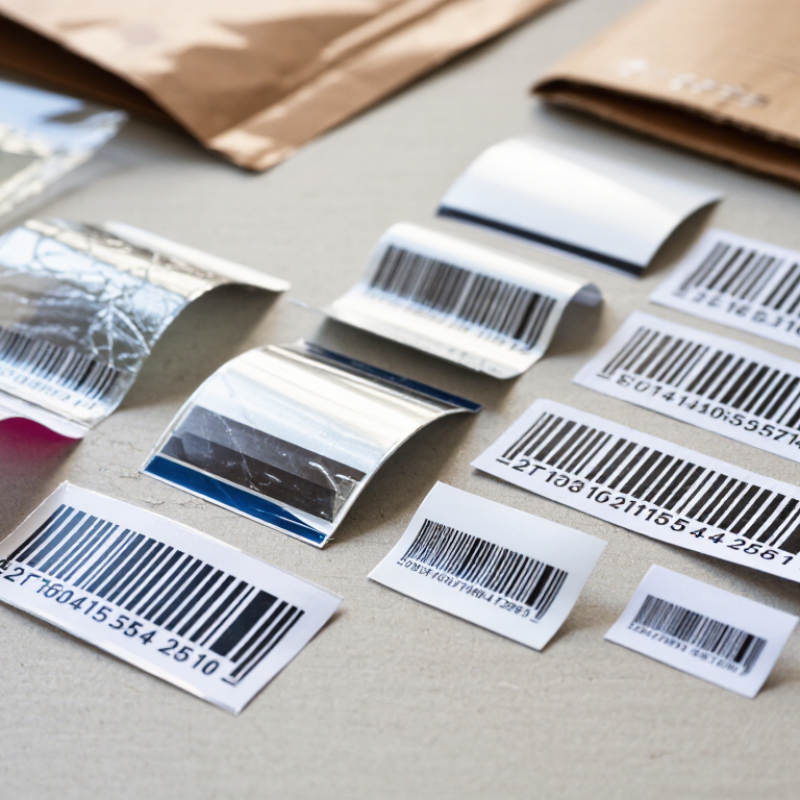
Barcode security labels combine a scannable code with features that reveal tampering. They may use serialized numbers, destructible materials, hidden marks, or a visible “VOID” pattern. When someone removes the label, the surface may tear or leave residue. In warehouse work, this creates a practical link between the item, shipment record, and inspection result. That link is useful.
Global buyers need them because products often pass through several warehouses and carriers. A clear barcode supports faster receiving, stock counting, and return checks. Security features can also show whether packaging was opened or replaced during handling. However, a barcode alone does not prove authenticity. It identifies data; it does not guarantee product quality. This distinction is easy to overlook. Buyers should match label performance with carton materials, storage temperature, scanning distance, and local documentation requirements. A label that works on smooth glass may fail on dusty cardboard. Real testing is essential, yet many purchasing teams test only one sample.
Tips: Request samples before ordering in volume. Test scanning after refrigeration, heat exposure, and repeated handling. Check adhesive strength on the actual package. Confirm that serial numbers cannot be duplicated easily. Keep records of label batches and inspection photos. Also review the supplier’s material specifications, quality controls, and replacement policy. Small omissions can become expensive.
How to Assess Barcode Security Labels for International Supply Chains
Choosing the best barcode security label requires more than comparing prices. International supply chains expose labels to humidity, dust, heat, and repeated handling. A reliable label should remain readable after long transport. Its adhesive must match the carton, plastic, glass, or metal surface. Tamper evidence also matters. A broken pattern or visible residue can reveal unwanted access.
Assess barcode quality under real warehouse conditions. Scan samples from different angles and distances. Test them after refrigeration, sunlight exposure, and abrasion. Confirm that each code supports traceability without duplicating another identifier. Human-readable numbers should match the scanned data. Small errors can create large inventory problems. I have seen attractive labels fail because their adhesive softened inside warm containers. That result was preventable.
Tips: Request production samples, not only digital proofs. Test them with your actual scanners and software. Check print contrast, barcode size, serial-number control, and removal evidence. Ask suppliers for material specifications and quality records. Review packaging requirements in every destination market. A label may pass one facility’s test but fail another’s process. Keep a simple test log with dates, conditions, and scan results. Recheck it when suppliers, surfaces, or transport routes change.
Ten High-Performance Barcode Security Label Options by Use Case
10 Best Barcode Security Labels for Global Buyers
Ten High-Performance Barcode Security Label Options by Use Case
Choosing barcode security labels requires more than checking print quality. Packaging audits often reveal weak adhesive, blurred codes, or visible tampering. Void-pattern labels suit cartons, shipping cases, and sealed equipment. Destructible labels work well on small electronics because removal breaks the material. Serialized barcode labels support asset control, especially when every item needs a unique identity. Two-dimensional barcode labels store more data in limited space. They fit warehouse bins, service parts, and export documentation.
Cold-chain shipments benefit from temperature-indicator labels combined with readable barcodes. They create a visible record when storage conditions change. Chemical-resistant labels suit laboratory containers and industrial tools, where cleaning agents can damage ordinary stock. Outdoor-grade labels need strong adhesive, UV resistance, and durable facestock. They are useful for utility cabinets, transport crates, and field equipment. Tamper-evident seals with overlapping barcode areas help secure bottles, cases, and maintenance kits.
RFID-barcode hybrid labels support faster scanning and manual backup. They are practical in high-volume warehouses, but testing is essential around metal surfaces. UV-visible security labels add a discreet verification layer for controlled inventory. Removable audit labels can support short-term inspection workflows without leaving heavy residue. No option wins every test. A label that survives rain may fail during freezer storage. Buyers should request samples, test the actual substrate, and verify scan rates after abrasion, condensation, and removal attempts. Some suppliers overstate durability; documented testing remains more reliable than attractive specifications.
10 Best Barcode Security Labels for Global Buyers
Comparative performance of ten high-performance barcode security label options by common use case. Scores use a 1–10 scale, where 10 indicates stronger suitability for the stated performance criterion.
The comparison reflects typical material and construction characteristics used in barcode security labels. Actual performance depends on adhesive selection, surface preparation, printing method, storage conditions, and application environment.
Comparing Materials, Tamper Evidence, Scanability, and Durability
Choosing the best barcode security label depends on its working environment, not appearance alone. Polyester labels suit outdoor equipment, cold storage, and frequent handling. Destructible vinyl breaks into small pieces when removed. Void labels reveal a message or pattern after peeling. Paper labels cost less, but moisture and abrasion can weaken them quickly. I have seen attractive paper labels fail after one wet warehouse shift.
Tamper evidence must match the risk. A removable label may suit temporary tracking, while permanent adhesive supports long-term asset control. Scanability also matters. Test barcodes under warehouse lighting, glare, dust, and curved surfaces. High contrast, clean printing, and suitable barcode size improve first-scan performance. Small codes often look efficient, but they may frustrate scanners.
Tips: Test samples on the actual surface. Rub them with gloves, expose them to moisture, and scan them after handling. Check whether adhesive residue creates problems. Confirm printer compatibility, roll dimensions, and barcode verification before ordering large quantities. Durability claims can be misleading without temperature and abrasion testing. No label is perfect. A careful trial may reveal weaknesses that a product sheet misses. Experienced buyers should record failure points, not only successful scans.
How to Choose, Source, and Verify Labels for Global Operations
10 Best Barcode Security Labels for Global Buyers?
How to Choose, Source, and Verify Labels for Global Operations
Choosing a barcode security label begins with the operating environment, not the catalog photograph. A label used on cartons may fail on metal, glass, or textured plastic. Check surface energy, dust exposure, humidity, and temperature before requesting samples. For outdoor shipments, test UV resistance and waterproofing. Short tests help.
The barcode must remain readable after handling, scanning, and storage. Confirm the required symbology, print contrast, quiet zones, and data format with your operations team. Ask suppliers for material specifications, adhesive data, batch records, and inspection reports. Independent verification is valuable when labels protect inventory, equipment, or serialized assets. A small sample can expose poor edge adhesion within days.
Security features also need practical testing. Tamper-evident films may leave a pattern, split apart, or show a visible message after removal. Compare these effects against your receiving process. Verify scan rates using the actual scanners, lighting, and distance used in each warehouse. Global sourcing adds risk through translation errors, inconsistent batches, and changing lead times. Request a pre-production sample and retain an approved reference label. Keep records of supplier claims, test conditions, and rejected lots. No test is perfect. A label that passes one warehouse trial may fail during ocean transport or seasonal heat. Review results with quality, procurement, and local compliance specialists before approving volume production.

