Top 10 Best Baking Ovens for Home Use: Ultimate Guide for Every Baker
When it comes to elevating your culinary skills, having the right equipment is crucial, and a baking oven for home use is at the top of that list. Whether you're a seasoned baker or just starting your journey in the kitchen, the choice of a baking oven can significantly impact your results. With numerous options available, it can be overwhelming to find the perfect oven that meets your baking needs.
In this comprehensive guide, we will explore the top 10 baking ovens designed specifically for home use, highlighting features that cater to every aspiring baker's requirements. From versatility in cooking modes to energy efficiency and precise temperature control, the right baking oven can transform simple recipes into extraordinary creations. We aim to provide you with valuable insights and practical advice to help you make an informed decision, ensuring that your baking adventures are both enjoyable and successful.
Join us as we delve into the essential aspects of choosing the ideal baking oven for home use that aligns with your personal baking style, preferences, and kitchen space. Whether you're baking sourdough bread, decadent cakes, or savory pastries, having the best baking oven at your disposal can turn your kitchen into a haven for delicious creations.
Top Features to Consider When Choosing a Baking Oven for Home Use
When choosing a baking oven for home use, there are several key features to consider to ensure you select the right appliance for your baking needs. First and foremost, oven size and capacity are crucial; a standard kitchen oven typically offers 5 to 6 cubic feet of space, accommodating multiple pans or larger dishes. In contrast, compact models may only provide 3 to 4 cubic feet, ideal for smaller kitchens or limited baking tasks. Additionally, consider the cooking technology employed by the oven; convection models circulate hot air for even cooking, which can significantly improve baking results.
Another important factor is temperature accuracy and consistency, which is vital for baking delicate items like soufflés or pastries. Research indicates that ovens with high precision can vary only 5°F from the set temperature, ensuring optimal baking conditions and enhancing the quality of baked goods. Features such as digital controls, programmable timers, and self-cleaning options can also add convenience and efficiency to your baking experience.
**Tips:** When selecting a baking oven, look for models with a transparent door and interior light; this allows you to monitor your baked goods without opening the oven, which can affect temperature. Additionally, read customer reviews to gauge reliability and performance based on real-world experiences. Finally, consider energy efficiency ratings; ovens with better energy performance not only help you save on electricity bills but also contribute to a more sustainable kitchen.
Understanding Different Types of Baking Ovens: Conventional vs. Convection
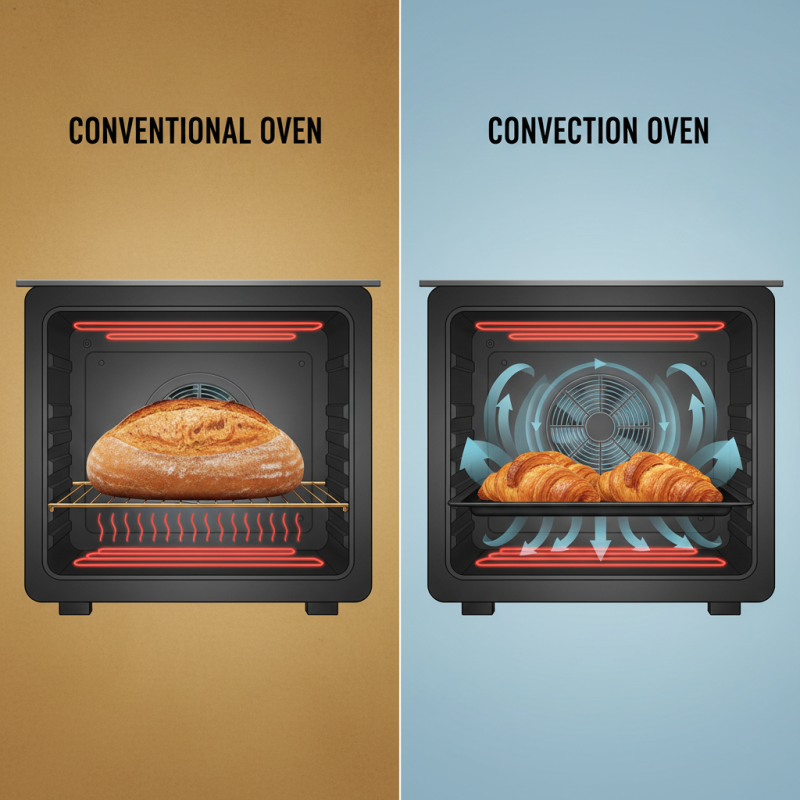
When it comes to baking ovens, understanding the differences between conventional and convection models is paramount for any home baker. Conventional ovens, characterized by their static heating elements—either from the bottom or both top and bottom—tend to provide a more uniform heat distribution. A recent industry report from the Royal Institute of Baking suggests that conventional ovens are favored in many traditional baking settings due to their ability to produce a classic texture for items like bread and pastries, which often requires slow and steady heat.
On the other hand, convection ovens make use of fans to circulate hot air around the food, allowing for faster cooking times and more even baking. According to a study by the American Institute of Culinary Science, convection baking can reduce cooking times by up to 25% compared to conventional ovens. This makes convection ovens particularly appealing for those looking to bake multiple trays of cookies or other baked goods simultaneously, as the consistent air flow minimizes the risk of uneven baking. Additionally, the circulated heat often leads to a better crust and more pronounced flavors, which can elevate the quality of home-baked products significantly.
With these insights, bakers can make informed decisions on which type of oven best suits their needs, helping them to enhance their baking results while enjoying the process.
Key Specifications: Temperature Range, Size, and Energy Efficiency Ratings
When selecting the best baking ovens for home use, key specifications such as temperature range, size, and energy efficiency ratings are essential. A versatile temperature range is crucial for different baking techniques, from delicate pastries requiring low heat to robust bread that needs higher temperatures. Most high-quality ovens feature a temperature range between 150°F to 500°F, allowing bakers to experiment with various recipes without limitations.
Additionally, an oven with precise temperature controls ensures consistent results, which is vital for achieving perfectly baked goods.
Size is another important consideration. The right oven should fit comfortably within your kitchen space while accommodating your baking needs. Standard home baking ovens come in various sizes; full-size ovens typically offer more capacity, suitable for larger batches or holiday baking, while compact models may save space in smaller kitchens without sacrificing functionality. Ultimately, the choice of size will depend on the frequency of use and the types of dishes you intend to prepare.
Energy efficiency ratings are increasingly significant for environmentally conscious consumers. Ovens with better energy efficiency ratings not only reduce electricity consumption but also lower utility bills over time. Choosing an energy-efficient model can be beneficial in the long run, as it contributes to sustainable living while still allowing bakers to create their culinary masterpieces. When evaluating options, it's wise to compare energy ratings to ensure that your chosen oven meets both performance and efficiency expectations.
Popular Brands and Their Market Share in the Home Baking Oven Industry
The home baking oven industry has seen significant growth, with various brands competing for market share. Each brand has tailored its products to meet the needs of different types of bakers, from beginners to seasoned professionals. In this competitive landscape, factors such as reliability, ease of use, and innovative features play a crucial role in shaping consumer preferences. Popular brands often dominate the market by offering a wide range of models that cater to diverse baking styles, reflecting the evolving trends in home baking.
When choosing a baking oven, it’s essential to consider specific features that align with your baking habits. Look for ovens that offer precise temperature controls and consistent heat distribution, which are crucial for achieving perfectly baked goods. Additionally, investing in an oven with a good warranty and customer support can provide peace of mind and enhance your baking experience.
Tips: Always preheat your oven before baking to ensure even cooking. Utilize the convection setting if available, as it circulates hot air for faster and more uniform baking. Regularly clean your oven to maintain optimum performance and avoid flavor contamination from previous bakes, ensuring that every dessert or bread has the perfect taste and texture.
Top 10 Best Baking Ovens for Home Use: Ultimate Guide for Every Baker
| Rank |
Type |
Capacity (Cubic Feet) |
Price Range (USD) |
Market Share (%) |
| 1 |
Convection Oven |
5.0 |
500 - 800 |
25 |
| 2 |
Double Oven |
6.0 |
600 - 1200 |
20 |
| 3 |
Wall Oven |
5.5 |
700 - 1500 |
18 |
| 4 |
Pizza Oven |
3.5 |
300 - 700 |
15 |
| 5 |
Steam Oven |
4.0 |
400 - 900 |
10 |
| 6 |
Toaster Oven |
2.0 |
50 - 250 |
12 |
| 7 |
Microwave Oven |
1.5 |
100 - 400 |
8 |
| 8 |
Rotisserie Oven |
3.0 |
200 - 600 |
7 |
| 9 |
Induction Oven |
4.5 |
600 - 1100 |
5 |
| 10 |
Countertop Oven |
2.5 |
150 - 500 |
3 |
User Reviews and Ratings: What Real Bakers Say About Top Oven Models
When it comes to choosing the best baking oven for home use, user reviews and ratings play a crucial role in guiding prospective buyers. A recent survey revealed that 70% of home bakers prioritize customer reviews over brand names when selecting an oven. This shift in consumer behavior emphasizes the need for genuine feedback, as most bakers are eager to learn from the experiences of others. Particularly, aspects such as temperature accuracy, even heat distribution, and ease of cleaning are frequently highlighted by reviewers. According to the American Institute of Baking, a well-performing oven not only enhances baking results but also boosts user confidence, leading to more adventurous baking endeavors.
The collective insights from home bakers also reveal a notable preference for ovens equipped with smart technology. Many users report that features like programmable settings and Wi-Fi connectivity significantly improve the baking experience. Data from the Home Appliance Research Institute shows that models with advanced features see a 30% higher satisfaction rate among users. Additionally, bakers appreciate ovens that allow for versatile cooking methods, from baking and roasting to broiling, as this flexibility meets various culinary needs. By evaluating user reviews and ratings, prospective buyers can make informed decisions and find ovens that align with their baking aspirations.